Rayan Farouk
It’s 9:12 am on a Tuesday morning in a Dubai clinic. The first patient is already in the room, the receptionist is fielding an insurance eligibility call, a nurse is logging vitals, and a physician is trying to remember what happened at a follow-up visit six weeks ago. Everyone is writing something down. The receptionist is noting a phone conversation. The nurse is recording a blood pressure and a pain score. The physician is about to write the note that a claims adjuster, an auditor, and possibly a lawyer will read months from now. Four different people, four different kinds of notes, one patient record. If those notes don’t fit together cleanly, the day gets slower and the record gets weaker.
The Note Is the Record
In a clinic, the note is not paperwork that sits beside the care. It is the care, as far as anyone downstream is concerned. The claim gets paid on the strength of the note. The next physician makes a decision based on the note. In a DHA or MOH audit, the note is the evidence that the visit happened the way you say it did. When people talk about “good documentation,” they usually mean one thing: the right kind of note, written by the right person, containing the right elements, saved to the right place.
The problem is that “note” is a single word standing in for a dozen distinct things. A progress note and a discharge summary are both notes, but they answer different questions, live under different rules, and are written by different people. Treating them as one undifferentiated pile is how records get messy and audits get uncomfortable. This piece walks through the main groups of notes, who writes them, how they behave inside an EMR, how to stop rewriting the same paragraph twenty times a day, and how this all comes together inside Balsam Medico.
We’ll keep the lens on the UAE, and Dubai and the Northern Emirates in particular, because the regulatory expectations here are specific and the tooling has to match them.
The Main Groups of Notes
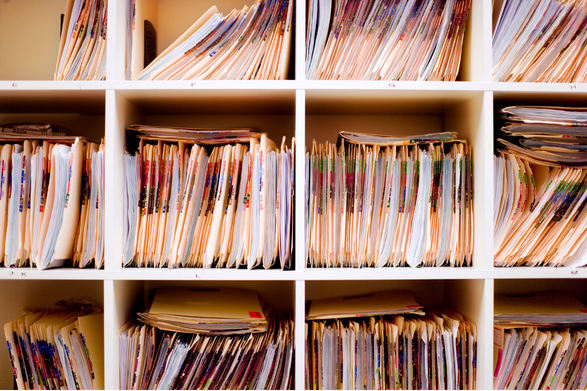
Most clinical documentation sorts into a handful of families. Knowing which family a note belongs to tells you who owns it, what it must contain, and how tightly it’s regulated.
Encounter and Progress Notes
This is the everyday workhorse. Every time a patient is seen, someone writes an encounter note documenting what happened: the complaint, the findings, the assessment, the plan. In outpatient settings the progress note is the spine of the whole record, and the SOAP structure (Subjective, Objective, Assessment, Plan) is still the most common way to organise it.
Progress notes accumulate. A patient with a chronic condition might have dozens over a couple of years, and the value is in the trend line as much as any single entry. That’s why being able to see and reuse prior notes matters so much, a point we’ll come back to.
Admission and Assessment Notes
When a patient enters a service, someone documents the starting point in detail: history, examination, initial differential, baseline observations. The admission note or initial assessment is longer and more structured than a routine progress note because everything that follows references it. In a day-surgery or specialist setting this is often the intake assessment that establishes the clinical baseline for the episode.
Procedure and Operative Notes
Anything done to the patient gets its own record. A procedure note captures what was performed, by whom, with what findings and what complications, if any. These notes carry weight in both clinical handover and billing, and they tend to be scrutinised closely because the stakes and the reimbursement are both high.
Nursing and Allied Health Notes
Nurses document a parallel and constant stream: vital signs, medication administration, wound care, patient responses, education given. Allied health providers, physiotherapists, dietitians, and others, each keep their own discipline-specific notes. These are not lesser notes. In many episodes the nursing record is the most continuous account of what actually happened hour to hour, and it frequently fills the gaps between physician entries.
Discharge and Transfer Summaries
When an episode ends, the discharge summary closes it: diagnoses, what was done, medications, follow-up plan, instructions to the patient. This is the note that travels. The next provider reads it, the patient takes it home, and it becomes the hinge between one episode of care and the next. A weak discharge summary is where continuity of care breaks.
Administrative and Communication Notes
Not every note is clinical. Telephone calls, appointment changes, insurance conversations, consent discussions, no-shows, these get logged too, usually by front-desk and admin staff. They rarely feel important in the moment, but they’re often what saves you in a dispute about what was communicated and when.
Here’s how the families compare at a glance:
| Note group | Typical author | Core question it answers | Regulatory sensitivity |
| Encounter / progress | Physician, specialist | What happened this visit? | High |
| Admission / assessment | Physician, nurse | Where did this episode start? | High |
| Procedure / operative | Physician, surgeon | What was done to the patient? | Very high |
| Nursing / allied health | Nurse, PT, dietitian | What happened between visits? | Medium–high |
| Discharge / transfer | Physician | How does this episode close? | Very high |
| Administrative / comms | Reception, admin | What was communicated, and when? | Medium |
Head’s Up: In the UAE, the author of a note and the credential attached to it are not cosmetic. DHA and MOH expectations tie certain documentation to specific licensed roles, and claims can be rejected when the note’s author doesn’t match the service billed. Before you standardise your note types, confirm which roles are permitted to author and sign each one. Getting this wrong is a compliance problem, not a formatting preference.
How Different Departments Use Notes

The same note groups get used very differently depending on where you stand in the clinic.
Reception and front desk live mostly in administrative and communication notes. Their documentation is about the logistics of the encounter: who called, what was scheduled, what the patient was told, whether consent forms were signed, what the insurance situation is. Clean front-desk notes are what let the clinical team walk into a room already knowing the context.
Nursing sits at the busiest intersection. Nurses write their own nursing notes, but they also populate the objective layer that physician notes depend on, vitals, intake, medication administration. In a well-run clinic the nurse’s documentation flows directly into the physician’s note rather than being re-entered, which is one of the clearest places where a good EMR earns its keep.
Physicians and specialists own the progress, assessment, procedure, and discharge notes. Their documentation carries the diagnostic reasoning and the plan, and it’s the part auditors and payers read most closely. Physicians also feel the time pressure most acutely, because their notes are the longest and the most consequential, and they’re writing them between patients.
Allied health providers keep discipline-specific records that need to be legible to the rest of the team without being buried. A physiotherapy progress note has to be findable by the referring physician, which is a workflow question as much as a clinical one.
Medical assistants often prepare and pre-populate notes, entering history, setting up the encounter, readying templates, so the physician can focus on the assessment. Their role is less about authoring the final note and more about removing friction from it.
Where the Handoffs Break
The failure points are almost always at the boundaries between departments. The nurse’s vitals don’t make it into the physician’s note. The front desk logs a cancellation the clinical team never sees. The discharge summary goes out without the physiotherapy plan. None of these are documentation-quality problems in the narrow sense; each note might be fine on its own. They’re integration problems, and they’re the ones that quietly cost the most.
What Notes Live Inside an EMR
Moving from paper or scattered documents into an EMR changes what a note is. It stops being a block of text and becomes a structured object with an author, a timestamp, a note type, a status, and a link to a specific patient and encounter.
A capable EMR generally supports:
- Multiple note types mapped to the groups above, so a progress note behaves differently from a discharge summary.
- Structured fields alongside free text, so data like vitals, diagnoses, and medications is captured discretely and can be reused, reported on, and billed from.
- Author and role attribution on every entry, with electronic signatures, so it’s always clear who wrote and who signed.
- Timestamps and version history, so the record shows when each note was created and amended, which is central to audit defensibility.
- Status control, draft versus signed versus amended, so an unfinished note can’t masquerade as a completed one.
- Note history, so previously entered notes are retained and can be viewed or reused rather than rewritten.
That last capability is more important than it sounds. When the system keeps a patient’s prior notes accessible, a follow-up visit starts from context instead of from scratch, and the physician spends less time reconstructing the story and more time on the patient in front of them.
Automating and Simplifying Note Entry

The single biggest complaint about clinical documentation is that it takes too long and repeats itself. A physician who writes forty near-identical diabetes follow-up notes a week is doing avoidable work. The fix is to stop typing the same thing over and over. There are several ways to do that, and they stack.
Templates
Templates are the foundation. A template is a pre-built note structure for a common scenario, a follow-up visit, a specific procedure, a standard intake, with the fixed scaffolding already in place and only the patient-specific details left to fill. Good templates do three things at once: they save time, they enforce completeness (the required fields are already there), and they standardise the record across a team so notes are consistent regardless of who writes them.
The trap is over-templating. A template so rigid that it forces every patient into the same mould produces notes that read as boilerplate and, worse, invites cloned documentation that auditors distrust. The goal is a strong skeleton with room for the parts that are actually unique to this patient.
Reusing Prior Notes
When the EMR retains note history, the previous visit becomes a starting point. For a stable chronic patient, last month’s note is often 80% of this month’s note; the physician updates what changed rather than rebuilding the whole thing. This is templating by another route, and it tends to produce more natural, patient-specific notes than a generic template because it starts from a real prior encounter.
Head’s Up: Reuse is powerful and also the most common source of documentation errors. Carrying a note forward means carrying its mistakes forward too, and an outdated medication or a stale finding copied across three visits is exactly what an auditor flags. The discipline is simple: reuse the structure freely, but re-verify the content every single time. The time saved on formatting is worth nothing if the clinical facts drift.
Other Ways to Cut Friction
Beyond templates and reuse, a few practices consistently help:
- Structured pick-lists for diagnoses, medications, and common findings, so routine data is selected rather than typed.
- Pre-population from earlier steps, so vitals the nurse entered and history the assistant recorded flow into the physician’s note automatically.
- Role-based note preparation, letting medical assistants set up the encounter before the physician sits down.
- Sensible defaults for the fields that are the same most of the time, with easy override for when they aren’t.
The principle underneath all of these is the same: enter each piece of information once, by the person best placed to enter it, and let it flow to wherever it’s needed.
How Notes Work in Balsam Medico
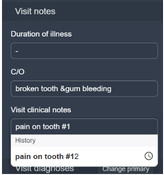
Balsam Medico is a full EMR built for how clinics in this region actually run, and notes sit at the centre of it rather than off to the side.
Notes in Balsam Medico are tied to the patient and the encounter, attributed to the author, and organised by type so that the different groups described above, progress notes, assessments, procedure notes, nursing and allied health entries, discharge documentation, and administrative notes, each behave according to their purpose rather than being one flat text field.
For the everyday workhorse, the progress note, Balsam Medico supports templates, so your common scenarios can be built once and reused across the team. Instead of retyping the structure of a routine follow-up, the physician starts from a template with the scaffolding already in place and fills in what’s specific to the patient. That keeps notes consistent across different authors and shortens the time each one takes.
Balsam Medico also saves previously added notes as history, so a patient’s earlier notes stay accessible. A follow-up visit begins with the prior context in view rather than a blank page, and the physician can build on what came before instead of reconstructing it. For chronic and repeat patients, this is where a lot of the daily time saving actually comes from.
Because Balsam Medico is a single system spanning reception, nursing, physicians, and allied health, the departmental handoffs discussed earlier happen inside one record. The receptionist’s administrative notes, the nurse’s observations, and the physician’s clinical note are part of the same patient file rather than scattered across separate tools, which is precisely where continuity usually breaks in clinics running on stitched-together systems.
Why This Matters for UAE Clinics
For clinics in Dubai and the Northern Emirates, the practical payoff is threefold. Notes are attributed to the correct author and role, which supports the credential-matching that DHA and MOH expectations require. Note types are distinct, so the record reflects what each note is actually for. And the whole documentation trail lives in one place, which is what makes a record straightforward to defend in an audit rather than a scramble to assemble after the fact.
Templates keep your team’s documentation consistent and fast; saved note history keeps it contextual and continuous; single-system design keeps it whole. Together they turn documentation from a tax on the day into something closer to a byproduct of good care.
Where This Is Heading
Clinical documentation is moving in one clear direction: less typing, more capture. Across the industry, the effort is going into removing keystrokes, through better structure, smarter reuse, ambient and assisted note-taking, and tighter integration between the people who generate information and the notes that need it. The clinics that come out ahead won’t be the ones writing longer notes; they’ll be the ones whose systems let each person enter information once and trust it everywhere.
For a UAE practice, the near-term work is more grounded than any of that. It’s making sure your note types map to your real workflows, that the right roles author the right notes, that your templates are strong without being rigid, and that reuse never outruns re-verification. Get those basics right inside a single EMR, and the more advanced capabilities become an extension of a healthy system rather than a patch over a broken one.
The morning we started with, four people, four kinds of notes, one patient, doesn’t have to be a scramble. When the receptionist’s log, the nurse’s vitals, the physician’s progress note, and the eventual discharge summary all live in the same record and flow into one another, the day gets faster and the record gets stronger at the same time. That’s the whole point of getting notes right.
Connect with Us
Ready to embark on this exciting journey? Contact us today:
📍 Dubai, United Arab Emirates – Tel: +971 56 640 9602
📍 Khartoum, Sudan – Tel: +249 91 273 1048
Explore Balsam Medico and discover a world of efficient clinic management at www.balsammedico.com. Together, let’s reduce fines, elevate efficiency, and embrace a new era of dental healthcare.
Join the Balsam Medico newsletter for exclusive content and the latest news. Be the first to view valuable information and updates!
One last thing..
PS: We built Balsam Medico to be the best software for clinics in UAE and the middle east. It is powerful, flexible, and most importantly, very easy to use.
If you have two minutes, see how it works.
This is the main landing page to learn more.