Rayan Farouk
If you run a clinic in Dubai, you already operate in a system where two very different patient journeys exist side by side. Cash patients who pay immediately, and insurance patients who go through approvals, claims, and payer processes.
At first glance, this might seem like a simple billing difference. But in reality, it impacts how you price services, how your team operates, how revenue flows into your clinic, and how compliant you are with regulations.
Many clinics underestimate how complex this balance can become. Some focus too much on attracting cash patients and lose pricing discipline. Others depend heavily on insurance but struggle with delayed payments and claim rejections. The result is usually the same — operational inefficiencies and revenue leakage.
To run a successful clinic in Dubai, you need to understand both models clearly and manage them within a structured system.
Why does this matter specifically in Dubai
Dubai’s healthcare system is highly regulated and insurance-driven. With mandatory health insurance in place, most patients are covered under different insurance networks. Clinics must follow payer agreements, coding standards, and submission protocols to receive payments.
At the same time, cash patients are still a major part of clinic operations, especially in:
- General practice visits
- Aesthetic and elective procedures
- Services not covered by insurance
- Walk-in consultations
This creates a hybrid model where clinics must operate with both flexibility and control. The challenge is not choosing between cash and insurance. It is managing both without creating confusion, inconsistencies, or compliance risks.
Understanding the fundamental difference
The difference between cash and insurance patients goes far beyond payment method. It changes the entire workflow.
Cash patients: speed and simplicity
Cash patients typically go through a straightforward process: register, receive treatment, and pay immediately.
There are no approval delays, no claim submissions, and minimal administrative overhead.
This allows clinics to:
- Move patients faster
- Collect revenue instantly
- Offer flexible pricing
However, this flexibility can also lead to inconsistency if not controlled properly.
Insurance patients: structure and regulation
Insurance patients follow a more complex journey:
- Eligibility verification
- Pre-approval (if required)
- Treatment
- Payment processing
- Claim submission
Each step must follow specific rules defined by insurance providers.
This introduces:
- Delays in payment
- Strict pricing limitations
- Higher administrative workload
But it also brings a steady flow of patients and predictable demand.

Pricing strategy: where clinics often struggle
Pricing is one of the most sensitive areas when dealing with both patient types. Many clinics do not have a clear strategy. Instead, they operate reactively.
Cash pricing: more freedom, more responsibility
With cash patients, clinics have full control over pricing. This sounds like an advantage, but it often leads to inconsistency. Some clinics:
- Set prices too low to attract patients
- Change prices frequently without structure
- Offer discounts without tracking impact
Over time, this affects profitability and brand positioning.
What a structured cash pricing model looks like
A well-defined cash pricing strategy should be based on:
- Actual cost of delivering the service
- Market rates in Dubai
- Level of expertise and specialization
- Patient experience and perceived value
Pricing should not be random. It should be consistent, justified, and aligned with your clinic’s positioning.
Insurance pricing: controlled by agreements
Insurance pricing is not flexible in the same way. It is usually defined by:
- Contracted rates with insurance companies
- Approved service codes
- Regulatory frameworks
This means:
- You must bill according to agreed rates
- You cannot adjust prices freely
- You must follow coding standards strictly
The challenge here is not setting prices. It is ensuring that billing is accurate and optimized.
The hidden risk: pricing gaps between cash and insurance
One of the most overlooked issues is the gap between cash and insurance pricing. In some clinics, this gap becomes too large. For example:
- Cash consultation: AED 100
- Insurance billed consultation: AED 250
This creates multiple risks:
- Questions during audits
- Perceived unfair pricing
- Operational confusion
While differences are expected, they should always be reasonable and explainable.
Compliance risks related to pricing
In Dubai, pricing is closely tied to compliance. Incorrect pricing practices can lead to serious issues.
Common compliance mistakes
Many clinics unintentionally fall into risky practices such as:
- Upcoding (charging for a higher-level service than provided)
- Unbundling services incorrectly
- Billing services that were not performed
- Using inconsistent pricing structures
These issues are often not intentional. They usually result from:
- Lack of training
- Manual processes
- Poor system controls
Why this matters
Regulatory authorities expect clinics to maintain:
- Accurate billing
- Transparent pricing
- Proper documentation
Failure to meet these standards can result in:
- Claim rejections
- Financial penalties
- Increased scrutiny
Revenue cycle differences
Cash and insurance patients affect your revenue in very different ways.
Cash revenue cycle
- Immediate payment
- No follow-up required
- Predictable cash flow
This makes cash patients attractive from a liquidity perspective.
Insurance revenue cycle
- Delayed payments
- Claims processing time
- Risk of rejection or partial payment
Revenue from insurance patients depends heavily on:
- Accuracy of claims
- Efficiency of follow-up
- Strength of documentation
Where clinics lose money
Revenue loss in clinics is rarely due to lack of patients. It is usually due to process inefficiencies.
Common leakage points
- Incorrect coding leading to rejected claims
- Missing documentation delaying approvals
- Untracked discounts for cash patients
- Billing errors
- Lack of follow-up on unpaid claims
These small issues add up quickly.
Documentation: the backbone of both models
Whether dealing with cash or insurance patients, documentation is critical.
For insurance patients, documentation supports:
- Claim approvals
- Medical necessity
- Coding accuracy
Without proper documentation, claims are likely to be rejected.
For cash patients, documentation protects your clinic during:
- Audits
- Disputes
- Internal reviews
It also ensures consistency in service delivery.
What should always be documented
- Patient information
- Diagnosis
- Treatment provided
- Doctor notes
- Charges applied
Managing patient expectations
Patient experience is directly linked to how pricing is handled.
Cash patients expect clear and upfront pricing, fast service, and transparency. Unexpected charges can damage trust quickly.
Insurance patients expect smooth approval process, clarity on coverage, and minimal out-of-pocket expenses. Confusion here often leads to frustration at reception.
Operational challenges clinics face
Managing both patient types creates operational complexity.
Common issues
- Staff confusion between workflows
- Delays in approvals
- Errors in billing
- Miscommunication with patients
These problems usually arise when processes are not clearly defined.
Building a structured approach
To manage both cash and insurance patients effectively, clinics need a clear system.
Standardize pricing logic
Even if prices differ, the logic behind them should be consistent.
Define workflows clearly
Your team should know exactly:
- When to follow cash processes
- When to follow insurance processes
Reduce manual intervention
Manual work increases errors. Automation improves accuracy and efficiency.
Track performance metrics
Monitor:
- Claim approval rates
- Average payment time
- Revenue by patient type
- Discount patterns
This gives you control over your operations.
The role of technology in simplifying everything
Trying to manage all of this manually is where most clinics struggle. A modern clinic management system brings structure to both models.
Key capabilities that make a difference
- Centralized patient data
- Automated billing workflows
- Accurate coding support
- Real-time claim tracking
- Structured pricing management
With the right system, processes become consistent and easier to manage.
How Balsam Medico supports clinics in Dubai
Balsam Medico is built for clinics operating in environments where both cash and insurance patients are part of daily operations.
- Unified workflows: Manage both patient types within one system without confusion.
- Smart billing: Apply correct pricing and billing logic automatically.
- Claims visibility: Track claims, approvals, and payments in real time.
- Structured pricing: Maintain consistency across services and patient types.
- Operational control: Get full visibility into your clinic’s performance.
Instead of relying on manual processes, everything becomes streamlined.
The long-term impact of getting this right
When pricing and compliance are handled properly, clinics experience:
- Better financial stability
- Faster patient flow
- Reduced claim rejections
- Improved staff efficiency
- Stronger patient trust
It creates a more predictable and scalable business.
A shift in mindset
Many clinics see cash and insurance patients as two separate systems. This is where the problem starts. They are not separate, nor part of the same operation. The goal is to manage them within a unified structure.
Final thought
Running a clinic in Dubai means operating in a system that demands both flexibility and control. Cash patients bring speed and immediate revenue, and insurance patients bring scale and consistency. But without the right processes, both can become sources of inefficiency and risk. The clinics that succeed are the ones that:
- Define clear pricing strategies
- Build structured workflows
- Maintain strong documentation
- Use systems that support compliance
Because in the end, it is not about choosing one model over the other. It is about managing both in a way that keeps your clinic efficient, compliant, and financially strong.
Ready to embark on this exciting journey? Contact us today:
📍 Dubai, United Arab Emirates – Tel: +971 56 640 9602
📍 Khartoum, Sudan – Tel: +249 91 273 1048
Explore Balsam Medico and discover a world of efficient clinic management at www.balsammedico.com. Together, let’s reduce fines, elevate efficiency, and embrace a new era of dental healthcare.
Join the Balsam Medico newsletter for exclusive content and the latest news. Be the first to view valuable information and updates!
One last thing..
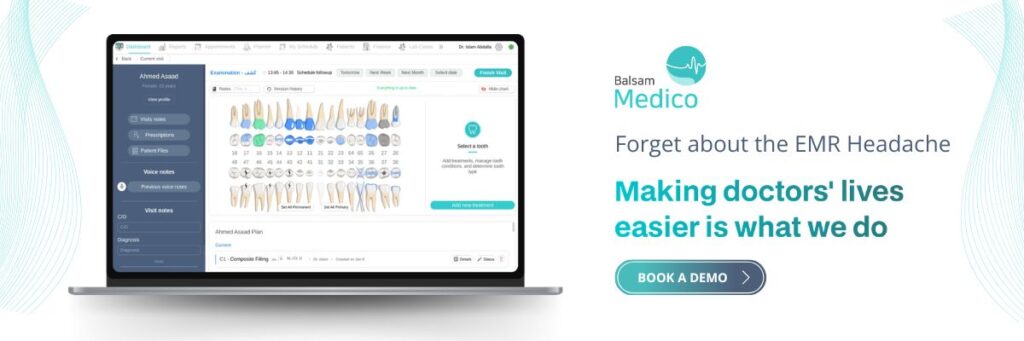
PS: We built Balsam Medico to be the best software for clinics in UAE and the middle east. It is powerful, flexible, and most importantly, very easy to use.
If you have two minutes, see how it works.
This is the main landing page to learn more.