Rayan Farouk
Healthcare insurance approvals are one of the biggest operational challenges facing clinics in Dubai and the Northern Emirates today. Whether it is a dental clinic requesting approval for crowns, a physiotherapy centre submitting session extensions, or a specialist clinic arranging MRI scans, pre-authorization has become deeply connected to revenue collection and compliance.
Many clinics only realise the importance of authorization after facing claim denials, delayed reimbursements, insurance disputes, patient complaints, revenue leakage, and audit problems.
In the UAE healthcare sector, insurance companies and TPAs are becoming stricter about approval workflows through platforms such as eClaimLink and Riayati.
For clinics operating in Dubai and the Northern Emirates, understanding when pre-authorization is mandatory is essential for protecting profitability and avoiding unnecessary financial loss.
What Is Pre-Authorization?
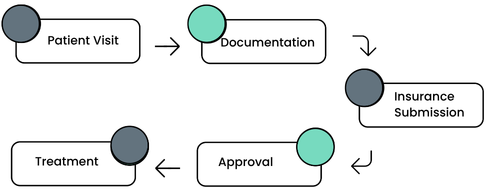
Pre-authorization, also called prior approval or pre-approval, is the insurer’s confirmation that a treatment or procedure is medically necessary and covered before it is performed.
The clinic submits:
- Diagnosis details
- Treatment plans
- Clinical notes
- Supporting documents
- Radiographs or imaging
- Cost estimates
The insurance company or TPA then:
- Approves the treatment
- Rejects the request
- Requests additional documents
- Approves partially
- Suggests alternative treatment coverage
Without authorization, many procedures become financially risky for the clinic.
Why UAE Clinics Struggle With Pre-Authorization
Many clinics still face operational issues because insurance requirements constantly change.
Common challenges include:
- Different rules for every insurer
- Different rules for every TPA
- Frequent policy updates
- Complex dental coverage rules
- Missing documentation
- Delayed insurer responses
- Staff unfamiliarity with insurance requirements
- Poor internal tracking systems
A treatment approved by one insurer may be rejected by another even when the procedure is identical.
Real Use Case #1 — Dental Crown Rejection
A dental clinic in Dubai performed four zirconia crowns for a patient with premium insurance coverage.
The clinic assumed crowns were covered because the patient had dental insurance or a similar claim had been paid before. It can also be because the policy looked comprehensive.
However, no pre-authorization was submitted, or the insurer required approval for prosthetic procedures or supporting X-rays were not uploaded.
So the result is that the claim is completely rejected, and the clinic has now lost over AED 6,000, and so the patient refused to pay out-of-pocket because they believed insurance covered it.
In this case, the issue wasn’t the treatment itself, it was missing authorization.
When Is Pre-Authorization Usually Mandatory?
Authorization requirements vary by insurer, but the following categories commonly require approval.
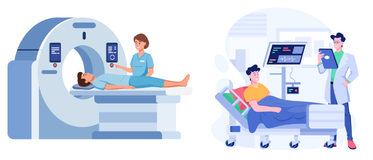
In Advanced Imaging, requesting the authorization for MRI, CT scan, PET scan, nuclear medicine imaging, and specialized ultrasounds requires consultation notes, ICD diagnosis, clinical indication, and previous treatment attempts.
In Surgical Procedures, the orthopedic surgery, ENT procedures, general surgery, gynecology procedures, and daycare surgeries require surgical reports, diagnostic imaging, lab investigations and specialist recommendations.
Physiotherapy is usually approved for a limited number of sessions by most insurers. Additional sessions usually require:
- Progress reports
- Functional improvement notes
- Reassessment findings
In high-cost medications, such as biologics, speciality injections, oncology medications, and chronic disease medications, insurers review medical necessity, alternative therapies, diagnosis confirmation, and prescription justification.

Dental Procedures That Frequently Require Approval
Dental insurance is one of the most restrictive insurance areas in the UAE. Treatments such as crowns and bridges often require X-rays, clinical photos, tooth condition documentation and justification for replacement.
Orthodontics such as braces, aligners and retainers approvals may depend on patient age, medical necessity and policy annual limits.
Dental implants are classified differently according to many insurers as cosmetic, partially covered, excluded and medically necessary. Its documentation often includes OPG imaging, bone assessment and missing tooth history.
Surgical extractions authorizations may be needed for impacted wisdom teeth, sedation cases and surgical extraction procedures.
Periodontal procedures like flap surgery, deep scaling, root planning and gum surgery are frequently audited by insurers.
Real Use Case #2 — MRI Delay Due to Missing Notes
A specialist clinic in Sharjah requested MRI approval for a patient with chronic back pain. The authorization request included the MRI code and diagnosis, but the clinic forgot to upload consultation notes, neurological findings and conservative treatment history. The insurer responded, requesting additional information.
The result of this is the MRI is delayed by 4 days, and the patient becomes frustrated. Now the appointment rescheduling has created an operational disruption, and the clinic staff spent hours following up. The issue was not eligibility. It was incomplete documentation.
The Role of eClaimLink in Dubai Clinics
eClaimLink is one of the main healthcare claims exchange systems used across Dubai healthcare providers. Clinics use it to:
- Verify insurance eligibility
- Submit claims
- Send authorization requests
- Receive approvals
- Track claim status
- Access remittance advice
Most Dubai insurers and TPAs integrate heavily with eClaimLink workflows.
The Role of Riayati in UAE Healthcare
Riayati supports healthcare data integration across the UAE. Its broader healthcare ecosystem supports:
- Digital health records
- Information exchange
- Interoperability
- Regulatory healthcare connectivity
As UAE healthcare digitization grows, clinics increasingly depend on integrated systems connected to insurance and regulatory platforms.
Emergency Cases vs Elective Procedures
One major misunderstanding in clinics is assuming urgent cases never require authorization. That is not always true.
True emergencies may proceed immediately, such as trauma, severe bleeding, acute emergencies, and life-threatening situations. However:
- Documentation must clearly justify emergency status
- Retrospective approval may still be requested
- Insurers may audit emergency claims later
Elective procedures or planned treatments almost always follow approval rules. Examples like dental crowns, MRI imaging, physiotherapy packages, elective surgeries, and orthodontics. Performing these without authorization increases denial risk significantly.
Real Use Case #3 — Physiotherapy Sessions Denied
A physiotherapy clinic in Ajman treated a patient for 18 sessions after knee surgery. The insurer initially approved 6 sessions only. Yet the clinic continued treatment, assuming extensions would be approved later.
However, no extension request was submitted, and no progress report was uploaded. So the 12 sessions are denied, resulting in significant revenue loss, and the patient refused direct payment. The clinic’s mistake was continuing treatment beyond authorized limits.
Common Reasons Authorization Requests Get Rejected
Incomplete documentation can immediately delay approval. Documentation such as consultation notes, X-rays, MRI reports, lab reports, and clinical photos.
Incorrect coding often triggers automated rejections; it can happen in CPT codes, ICD diagnosis codes and CDT dental procedure codes.
Weak medical necessity is another reason. Insurers evaluate whether treatment is clinically justified. Poor notes increase rejection risk.
Policy exclusions because some services may not be covered such as cosmetic dentistry, certain implant systems and experimental procedures.
Real Use Case #4 — Orthodontic Coverage Misunderstanding
A patient visited a Dubai dental clinic for clear aligners. The front desk staff informed the patient, “Insurance should cover it.”
The clinic proceeded with scans, treatment planning and the initial aligner setup. Later, the insurer clarified that the orthodontics are covered only for patients under 18, and the patient was 29 years old. This results in major patient disputes, delayed payment collection and negative patient experience.
Financial Impact of Poor Authorization Management
- Revenue Leakage
Denied procedures directly reduce revenue. - Delayed Cash Flow
Appeals and resubmissions slow reimbursements. - Higher Administrative Costs
Staff spend time following up with insurers, resubmitting claims, managing disputes, and calling TPAs. - Lower Patient Satisfaction
Patients dislike treatment delays, unexpected bills, and insurance confusion. - Increased Audit Risk
Repeated authorization errors may trigger insurance scrutiny, recovery requests, and compliance reviews.
Best Practices for Clinics
- Verify Eligibility Before Every Visit
Always confirm the active policies, network status, coverage type and authorization requirements. - Train Front Desk Teams
Your staff should understand basic insurance rules, common exclusions, approval workflows and escalation processes. - Use Standardized Documentation
Templates improve consistency and reduce missing information. - Assign Dedicated Insurance Coordinators
Dedicated staff improve follow-up speed, tracking accuracy, and approval turnaround times.
How Technology Helps Reduce Authorization Problems
Modern clinic management systems can:
- Integrate with eClaimLink
- Verify insurance instantly
- Track pending approvals
- Alert staff about expiry dates
- Store supporting documents
- Reduce manual entry errors
Automation helps clinics:
- Reduce claim denials
- Improve efficiency
- Speed up approvals
- Increase collection rates

The Future of Pre-Authorization in UAE Healthcare
The UAE healthcare sector continues moving toward:
- Real-time approvals
- AI-assisted claims review
- Stronger digital integration
- Automated compliance validation
- Centralized healthcare data exchange
Platforms like eClaimLink and Riayati are part of this transformation. Clinics relying on outdated manual workflows may struggle as insurance systems become more automated and compliance-focused.
Final Thoughts
Pre-authorization is no longer just an insurance department task. It is now a core operational process that directly impacts
- Revenue
- Cash flow
- Patient satisfaction
- Compliance
- Clinic profitability
For clinics in Dubai and the Northern Emirates, understanding when authorization is mandatory can prevent thousands of dirhams in denied claims and operational losses. The most successful clinics are usually not the ones processing the highest number of patients. They are the clinics with:
- Strong insurance workflows
- Accurate documentation
- Trained teams
- Efficient systems
- Clear communication processes
As UAE healthcare insurance systems continue evolving through platforms like eClaimLink and Riayati, clinics that strengthen their authorization management processes today will be far better prepared for long-term operational success.
Connect with Us
Ready to embark on this exciting journey? Contact us today:
📍 Dubai, United Arab Emirates – Tel: +971 56 640 9602
📍 Khartoum, Sudan – Tel: +249 91 273 1048Explore Balsam Medico and discover a world of efficient clinic management at www.balsammedico.com. Together, let’s reduce fines, elevate efficiency, and embrace a new era of dental healthcare.
One last thing..
PS: We built Balsam Medico to be the best software for clinics in UAE and the middle east. It is powerful, flexible, and most importantly, very easy to use.
If you have two minutes, see how it works.
This is the main landing page to learn more.