Rayan Farouk
Running a clinic in the UAE is more challenging than ever. Between patient care, staffing, compliance requirements, insurance approvals, and operational expenses, clinic owners and administrators are under constant pressure to maintain profitability while delivering high-quality healthcare.
Yet one of the biggest financial problems facing clinics today is often invisible.
It is not necessarily low patient volume. It is not always expensive equipment. And it is not only rising operational costs.
In many cases, the real problem is revenue leakage caused by billing mistakes.
A single coding error, missing authorization, or incorrect insurance detail can delay payments for weeks or completely reject a claim. When these issues happen repeatedly across hundreds or thousands of claims every month, clinics can quietly lose tens or even hundreds of thousands of dirhams every year.
Across Dubai, Abu Dhabi, Sharjah, Ajman, and the Northern Emirates, healthcare providers are increasingly dealing with:
- Insurance claim rejections
- Delayed reimbursements
- Prior authorization failures
- Coding mismatches
- Timely filing denials
- Documentation gaps
- Eligibility verification issues
- Revenue cycle inefficiencies
Most of these problems are preventable.
The challenge is that many clinics only notice the issue after cash flow becomes unstable.
This article explores the most common billing mistakes that cost UAE clinics significant revenue, why they happen, and how clinics can reduce denials, improve claim acceptance rates, and protect profitability.
Why Billing Accuracy Matters More Than Ever in UAE Healthcare
The UAE healthcare system relies heavily on insurance-based reimbursement.
Clinics submit claims electronically through platforms such as eClaimLink and other payer systems, and insurers evaluate whether each claim meets medical, technical, and policy requirements before approving payment.
The process sounds simple.
In reality, every claim passes through multiple checkpoints:
- Patient eligibility verification
- Coverage validation
- Medical coding review
- Diagnosis-to-procedure matching
- Prior authorization checks
- Timely filing validation
- Clinical documentation review
- Policy limitations and exclusions
If any part of the process contains incorrect or incomplete information, the insurer may:
- Reject the claim immediately
- Return it for correction
- Downcode the service
- Delay reimbursement
- Partially pay the claim
- Request additional documentation
- Trigger audits or compliance reviews
Even small administrative mistakes can create large financial consequences.
For example, a rejected consultation claim may only represent a few hundred dirhams. But if the same error affects hundreds of visits each month, the accumulated loss becomes substantial.
This is why Revenue Cycle Management (RCM) has become one of the most important operational areas in modern clinics.
Strong billing workflows directly impact:
- Cash flow
- Operational stability
- Staff efficiency
- Patient experience
- Insurance relationships
- Clinic profitability
Clinics that optimize their billing operations often improve profitability without increasing patient volume.
1. Incorrect Medical Coding
Medical coding mistakes are one of the largest causes of claim denials in the UAE.
Every diagnosis, consultation, treatment, investigation, and procedure must be coded correctly using standardized coding systems such as:
- ICD-10
- CPT
- HCPCS
- DHA and UAE-specific coding requirements
If the selected code does not accurately reflect the clinical documentation, insurers may reject or downcode the claim.
Common Coding Problems
Upcoding
This happens when a higher-complexity service is billed than what the documentation supports.
In many clinics, this is accidental rather than intentional. It often occurs because:
- Staff use outdated templates
- Billing teams rely on default codes
- Documentation lacks detail
- Providers rush through notes
- Coding rules change over time
Even accidental upcoding can trigger payer audits and reimbursement delays.
Undercoding
Undercoding occurs when clinics bill for a lower-level service than what was actually provided.
While this may reduce rejection risk temporarily, it creates major long-term revenue loss.
Many clinics unknowingly underbill thousands of dirhams every month simply because providers are not documenting the full complexity of care.
Diagnosis and Procedure Mismatches
A common denial occurs when the diagnosis code does not medically justify the billed procedure.
For example:
- Ordering advanced imaging without supporting diagnosis codes
- Submitting lab investigations unrelated to documented symptoms
- Billing procedures that conflict with clinical notes
Insurance systems automatically flag many of these inconsistencies.
How to Reduce Coding Errors
Clinics can significantly reduce coding-related denials by:
- Conducting regular coding audits
- Training providers on documentation standards
- Updating coding libraries frequently
- Using integrated EMR and billing systems
- Reviewing payer-specific rules
- Implementing pre-submission claim validation
Coding accuracy is not just a finance issue.
It is also a compliance issue.

2. Missing Prior Authorizations
Prior authorization failures are another major source of denied claims.
Many insurers in the UAE require approval before certain services are performed.
These commonly include:
- MRI and CT scans
- Surgical procedures
- High-cost medications
- Specialist treatments
- Physiotherapy sessions
- Long-term therapy plans
- Advanced diagnostics
If the authorization is missing, expired, incomplete, or incorrectly submitted, insurers may reject the entire claim.
Why Prior Authorization Problems Happen
Clinics often struggle with authorization workflows because they involve multiple moving parts:
- Insurance coordinators
- Doctors
- Front desk teams
- Patients
- Insurance portals
- Supporting documentation
Common issues include:
- Authorization requested too late
- Missing clinical notes
- Incorrect CPT or diagnosis codes
- Expired approvals
- Failure to track approval status
- Performing services before confirmation
In busy clinics, these errors become surprisingly common.
The Financial Impact
Authorization-related denials are especially damaging because they frequently involve high-value procedures.
A clinic may perform a costly treatment assuming approval is secured, only to discover afterward that:
- The approval was incomplete
- The authorization number was invalid
- The wrong procedure code was approved
- Coverage limits were exceeded
At that point, reimbursement becomes difficult or impossible.
Best Practices for Authorization Management
Clinics should:
- Verify authorization requirements before appointments
- Assign dedicated staff for approvals
- Use automated reminders and tracking systems
- Standardize documentation submission processes
- Confirm approvals before treatment begins
- Monitor payer-specific authorization rules
A strong authorization workflow protects both revenue and patient satisfaction.
3. Eligibility Verification Errors
One of the simplest billing mistakes is also one of the most expensive.
Many clinics fail to properly verify insurance eligibility before seeing patients.
This creates problems such as:
- Expired insurance cards
- Inactive policies
- Network mismatches
- Incorrect member IDs
- Coverage limitations
- Uncovered services
- Annual limit exhaustion
When eligibility issues are discovered after treatment is completed, recovering payment becomes far more difficult.
Why Front Desk Accuracy Matters
The front desk is the starting point of the revenue cycle.
Errors made during patient registration often continue throughout the billing process.
A simple typo in:
- Emirates ID
- Insurance number
- Date of birth
- Policy details
can cause claims to fail automatically.
This is why patient intake accuracy directly impacts clinic revenue.
Common Eligibility Mistakes
Assuming Existing Patients Are Still Active
Insurance policies frequently change.
Patients may:
- Change employers
- Switch insurance providers
- Downgrade plans
- Lose coverage
- Reach benefit limits
Clinics that skip re-verification risk submitting invalid claims.
Not Checking Network Participation
Even if insurance is active, the clinic or physician may not be within the patient’s approved network.
This can lead to:
- Partial reimbursement
- Claim rejection
- Patient billing disputes
How Clinics Can Improve Eligibility Checks
Best practices include:
- Real-time eligibility verification
- Digital insurance card scanning
- Automated coverage checks
- Verification before every visit
- Staff training on insurance plans
- Integrated insurance validation tools
Prevention at the front desk is significantly cheaper than fixing rejected claims later.

4. Delayed Claim Submission
Timely filing denials are one of the most frustrating revenue losses because they are often irreversible.
Most insurance companies enforce strict claim submission deadlines.
If a clinic submits claims after the allowed timeframe, insurers may reject them automatically regardless of clinical validity.
In many cases, there is no successful appeal.
Why Claims Get Submitted Late
Late submissions usually happen because of workflow bottlenecks such as:
- Coding delays
- Missing documentation
- Staff shortages
- Manual claim preparation
- Backlogged approvals
- System downtime
- Poor internal coordination
Some clinics still batch claims weekly or monthly, increasing the risk of missed deadlines.
The Hidden Revenue Drain
Late submission problems often affect high-value claims.
Simple outpatient consultations are usually processed quickly.
However, complex cases involving:
- Surgical procedures
- Specialist care
- Inpatient treatment
- Multiple investigations
frequently sit in billing queues longer.
By the time missing documentation is corrected, the filing window may already be closed.
How to Prevent Timely Filing Denials
Clinics should:
- Submit claims daily or several times weekly
- Automate billing workflows
- Reduce manual approval dependencies
- Monitor aging unbilled encounters
- Use dashboards for pending claims
- Track payer filing deadlines carefully
The faster a clinic submits clean claims, the healthier its cash flow becomes.
5. Poor Clinical Documentation
Even when coding appears correct, claims may still fail because the supporting documentation is incomplete.
Insurance companies increasingly review whether clinical notes justify the billed services.
Weak documentation creates problems such as:
- Medical necessity denials
- Downcoding
- Audit risks
- Delayed reimbursements
- Requests for additional records
Common Documentation Problems
Incomplete Notes
Short or vague clinical notes may not support the billed consultation level.
Missing Signatures
Unsigned charts can invalidate claims.
Missing Supporting Reports
Diagnostic claims often require attached reports or physician findings.
Copy-Paste Documentation
Repeated generic templates may trigger payer scrutiny.
Why Documentation Quality Matters
Insurers are not only paying for services.
They are evaluating whether the documentation proves:
- The service was medically necessary
- The diagnosis supports treatment
- The procedure was appropriately performed
- The consultation complexity matches the billed level
Without proper documentation, even clinically appropriate services may not get reimbursed.
Improving Documentation Standards
Clinics should:
- Standardize note templates
- Train physicians on payer requirements
- Encourage complete encounter documentation
- Use structured EMR workflows
- Conduct periodic chart audits
- Improve provider-billing communication
Strong documentation protects both revenue and compliance.

6. Failure to Track Denials Properly
Many clinics focus heavily on claim submission but fail to analyze denials afterward.
This creates a dangerous cycle:
- Claims get rejected
- Staff resubmit manually
- The same errors repeat
- Revenue leakage continues
Without denial tracking, clinics never identify the root cause.
Common Denial Management Problems
No Categorization
Clinics often treat all denials the same.
In reality, denials should be categorized into:
- Coding errors
- Authorization issues
- Eligibility problems
- Documentation deficiencies
- Technical submission failures
- Duplicate claims
- Timely filing denials
No Trend Analysis
If a specific insurer repeatedly rejects the same procedure, that pattern should trigger investigation.
Lack of Accountability
Without ownership, denied claims remain unresolved for months.
Why Denial Analytics Matter
A single recurring billing issue can quietly affect hundreds of claims.
For example:
- Incorrect modifiers
- Invalid diagnosis pairings
- Outdated payer rules
- Credentialing mismatches
If clinics do not monitor denial patterns, the losses continue indefinitely.
Building a Better Denial Workflow
Effective denial management includes:
- Root cause analysis
- Denial dashboards
- Monthly billing audits
- Assigned ownership
- Resubmission tracking
- KPI monitoring
- Staff retraining
The goal is not only to recover denied claims.
It is to prevent future denials from happening.
7. Manual Billing Processes
Many clinics still rely heavily on spreadsheets, disconnected systems, or manual workflows.
Manual processes increase the risk of:
- Data entry errors
- Duplicate submissions
- Missed claims
- Lost documentation
- Slow processing times
- Billing inconsistencies
As clinics grow, manual workflows become increasingly difficult to manage.
Common Operational Bottlenecks
Re-Entering Data Across Multiple Platforms
Staff often enter the same information into:
- EMRs
- Insurance portals
- Accounting software
- Reporting sheets
Every additional step increases error risk.
Lack of Real-Time Visibility
Without centralized dashboards, clinics struggle to monitor:
- Outstanding claims
- Pending approvals
- Rejection trends
- Revenue performance
- Accounts receivable aging
Why Automation Matters
Modern clinic management systems help reduce human error through:
- Automated eligibility checks
- Integrated coding support
- Claim scrubbing
- eClaimLink integration
- Real-time dashboards
- Automated reminders
- Digital workflows
Automation does not eliminate staff.
It allows staff to focus on high-value tasks instead of repetitive administrative work.
8. Ignoring Payer-Specific Rules
One major challenge in UAE medical billing is that every insurer may apply different claim requirements.
What works for one payer may fail for another.
Common payer differences include:
- Authorization rules
- Documentation requirements
- Coding preferences
- Submission timelines
- Coverage limitations
- Modifier usage
- Frequency restrictions
Clinics that use generalized workflows without payer-specific controls often experience unnecessary denials.
Why Payer Rules Change Frequently
Insurance companies continuously update:
- Policy structures
- Approval criteria
- Technical claim edits
- Reimbursement models
- Coverage rules
If billing teams are not regularly updated, outdated practices quickly create rejection problems.
Reducing Payer-Related Denials
Clinics should:
- Maintain updated payer guidelines
- Conduct regular billing team training
- Monitor insurer circulars
- Review rejection trends by payer
- Use systems with rule-based validation
Staying updated is now a core part of revenue cycle management.
9. Weak Communication Between Clinical and Billing Teams
Many revenue problems originate from poor communication.
Doctors, nurses, front desk staff, and billing teams often work in separate operational silos.
This creates gaps such as:
- Missing documentation
- Incorrect coding assumptions
- Delayed clarifications
- Incomplete authorizations
- Unresolved claim questions
Why Collaboration Matters
Billing accuracy depends heavily on clinical documentation.
If providers do not clearly document:
- Patient symptoms
- Medical necessity
- Procedure details
- Consultation complexity
billing teams cannot code claims properly.
Likewise, if billing teams do not communicate rejection trends back to providers, the same mistakes continue.
Building Better Internal Coordination
Clinics should:
- Hold regular billing review meetings
- Share denial reports with providers
- Create standardized workflows
- Improve documentation feedback loops
- Train clinical staff on reimbursement impact
Revenue cycle management is a clinic-wide responsibility.
Not just a billing department task.
10. Failing to Audit the Revenue Cycle
Some clinics only investigate billing issues after major financial problems appear.
By then, months of revenue may already be lost.
Regular audits help identify hidden inefficiencies before they become serious.
What Clinics Should Audit
Revenue cycle audits should review:
- Claim rejection rates
- Coding accuracy
- Authorization compliance
- Documentation quality
- Eligibility workflows
- Accounts receivable aging
- Unbilled encounters
- Payer performance
- Staff productivity
The Goal of Revenue Audits
The objective is not simply to find mistakes.
It is to improve operational efficiency and financial predictability.
Clinics that routinely monitor billing KPIs usually:
- Detect problems earlier
- Improve reimbursement speed
- Reduce denial rates
- Strengthen cash flow
- Improve long-term profitability
Revenue cycle visibility is essential for sustainable clinic growth.
How Technology Helps Prevent Billing Mistakes
Technology alone does not solve every billing issue.
However, the right clinic management system can significantly reduce administrative errors and improve operational efficiency.
Modern systems help clinics:
- Verify insurance eligibility faster
- Standardize coding workflows
- Track prior authorizations
- Submit cleaner claims
- Monitor denial analytics
- Improve documentation quality
- Reduce manual data entry
- Centralize financial reporting
Integrated billing systems also reduce the fragmentation that causes many operational delays.
Instead of managing disconnected tools and spreadsheets, clinics can work through a unified workflow.
This improves both accuracy and speed.
Why Revenue Leakage Often Goes Unnoticed
One of the most dangerous aspects of billing inefficiency is that it accumulates gradually.
Clinics rarely lose all their revenue at once.
Instead, losses occur silently through:
- Small denied claims
- Partial reimbursements
- Delayed collections
- Underbilling
- Missed filing deadlines
- Administrative inefficiencies
Individually, each issue may appear minor.
Collectively, they create substantial financial damage.
This is why many clinics believe they have a patient volume problem when the real issue is operational leakage.
Improving billing performance can often increase profitability faster than increasing appointments.
Final Thoughts
Billing mistakes are no longer small administrative inconveniences.
In the UAE’s insurance-driven healthcare environment, they directly affect clinic profitability, operational stability, and long-term growth.
From coding errors and authorization failures to documentation gaps and delayed submissions, even minor workflow problems can create major financial losses when repeated across hundreds of claims.
The good news is that most billing issues are preventable.
Clinics that invest in:
- Better workflows
- Staff training
- Denial analysis
- Revenue cycle audits
- Documentation quality
- Automation and integrated systems
are often able to:
- Reduce rejection rates
- Improve reimbursement speed
- Strengthen cash flow
- Increase operational efficiency
- Improve patient experience
The most successful clinics are not necessarily the ones with the highest patient volume.
They are the ones that operate efficiently, protect revenue carefully, and build scalable systems that reduce preventable financial loss.
In modern healthcare, strong revenue cycle management is no longer optional.
It is a core part of running a sustainable clinic.
About Balsam Medico
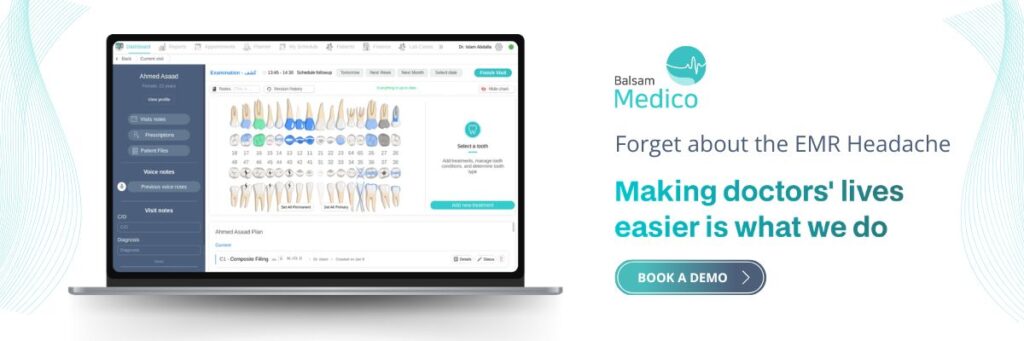
Balsam Medico is a modern clinic management and EMR platform designed for healthcare providers across the UAE. It helps clinics streamline operations, manage appointments, improve billing workflows, integrate with eClaimLink, and reduce administrative inefficiencies through a centralized healthcare management system.
Connect with Us
Ready to embark on this exciting journey? Contact us today:
📍 Dubai, United Arab Emirates – Tel: +971 56 640 9602
📍 Khartoum, Sudan – Tel: +249 91 273 1048
Explore Balsam Medico and discover a world of efficient clinic management at www.balsammedico.com. Together, let’s reduce fines, elevate efficiency, and embrace a new era of dental healthcare.
One last thing..
PS: We built Balsam Medico to be the best software for clinics in UAE and the middle east. It is powerful, flexible, and most importantly, very easy to use.
If you have two minutes, see how it works.
This is the main landing page to learn more.