Rayan Farouk
Most clinic owners think about inventory as a stock room problem: what’s on the shelf, what’s expiring, what needs reordering.
But the way a clinic values that inventory on paper has a direct, sometimes significant, effect on reported profit. Two consumables purchased at different prices, sitting in the same drawer, can produce two very different numbers on a profit and loss statement depending on the valuation method a clinic applies.
Our earlier post on dental inventory management touched briefly on FIFO (First-In, First-Out) as one way clinics track consumable costs. This piece goes further.
We compare FIFO against the weighted average cost method in detail, walk through worked examples using consumables a UAE clinic actually buys, and explain what each method does to cost of goods sold, gross margin, and the bottom line on your P&L.
Why Inventory Valuation Matters for a Clinic’s Financial Picture
Clinics are not typically thought of as inventory-heavy businesses the way a retail store or a distributor might be. But between gloves, sutures, local anesthetic cartridges, dental composites, filling materials, PPE, and pharmacy stock, a mid-sized clinic can carry a meaningful amount of consumable inventory at any given time.
Every one of those items has a cost. And every time a unit is used on a patient, that cost has to move from the balance sheet (inventory, an asset) to the income statement (cost of goods sold, an expense).
Inventory as a Financial Statement Line, Not Just a Stock Count

The physical count of items in a supply cabinet doesn’t change based on which valuation method is used. Ten boxes of gloves are ten boxes of gloves, regardless of accounting policy.
What changes is the dollar value assigned to those items when they’re sold or consumed, and the dollar value left over in ending inventory. That assignment decision flows directly into cost of goods sold (COGS), gross profit, taxable income, and inventory value on the balance sheet.
In a market like the UAE, where import costs and supplier pricing for medical consumables can shift due to currency movement, freight costs, or supplier changes, the gap between valuation methods becomes more than a bookkeeping technicality. It can meaningfully change what a clinic’s financials say about its performance.
FIFO (First-In, First-Out) Explained
FIFO assumes that the first units purchased are the first units used or sold. In a clinical setting, this usually mirrors physical reality: staff are trained to use older stock before newer stock, particularly for anything with an expiry date.
Under FIFO, the cost of goods sold reflects the price paid for the oldest inventory on hand, while what remains in ending inventory is valued at the most recent purchase prices.

How FIFO Plays Out in a Clinic
Worked Example: Local ِAnesthetic Cartridges
Suppose a clinic buys anaesthetic cartridges in three batches over a quarter:
- Batch 1: 500 units at AED 4.00 each
- Batch 2: 500 units at AED 4.30 each
- Batch 3: 500 units at AED 4.60 each
If the clinic uses 900 units during the quarter, FIFO assumes the first 500 units came from Batch 1 (AED 4.00) and the next 400 came from Batch 2 (AED 4.30).
COGS under FIFO = (500 × 4.00) + (400 × 4.30) = AED 2,000 + AED 1,720 = AED 3,720.
The remaining 600 units in inventory are valued at the newer, higher prices: 100 units at AED 4.30 and 500 units at AED 4.60, totaling AED 2,730.
FIFO’s Effect on the P&L During Price Changes
When supplier prices are rising, which has been common for imported dental and medical consumables, FIFO produces a lower COGS in the current period because older, cheaper stock is expensed first.
A lower COGS means a higher reported gross profit in that period. It also means ending inventory on the balance sheet is valued closer to current replacement cost, which some clinic owners and auditors prefer because it more accurately reflects what it would cost to restock today.
The trade-off: because FIFO can inflate profit during inflationary periods, it can also inflate the taxable base in jurisdictions where corporate tax applies, and it can create a mismatch between the “current” cost of running the clinic and the profit being reported.
Weighted Average Cost Method Explained
The weighted average method takes a different approach. Instead of tracking which specific batch a unit came from, it blends the cost of all units available during the period into a single average cost per unit.
Every unit sold or used, regardless of which shipment it physically came from, is expensed at that same average cost. Ending inventory is also valued at that average.

How Weighted Average Works
Same example, weighted average method
Using the same anesthetic cartridge purchases:
- Total units available: 1,500 (500 + 500 + 500)
- Total cost: (500 × 4.00) + (500 × 4.30) + (500 × 4.60) = AED 2,000 + 2,150 + 2,300 = AED 6,450
- Weighted average cost per unit: AED 6,450 ÷ 1,500 = AED 4.30
If 900 units were used, COGS = 900 × 4.30 = AED 3,870.
Ending inventory (600 units) = 600 × 4.30 = AED 2,580.
Weighted Average’s Effect on the P&L
Notice the difference against the FIFO example above: weighted average produced a higher COGS (AED 3,870 vs. AED 3,720) and therefore a lower gross profit for the same period, same purchases, same usage.
Weighted average tends to smooth out the impact of price fluctuations. Neither the oldest nor the newest purchase price dominates the number; every price paid during the period contributes proportionally.
This makes weighted average a common choice for clinics that want fewer swings in reported margin from month to month, particularly when supplier pricing is volatile or when a clinic doesn’t track individual batches at the level of granularity FIFO requires.
FIFO vs. Weighted Average: Side-by-Side Comparison
| Factor | FIFO | Weighted Average |
|---|---|---|
| Assumption | Oldest stock used first | All stock blended into one average cost |
| COGS during rising prices | Lower (uses older, cheaper cost) | Moderate (blends old and new costs) |
| Reported gross profit during rising prices | Higher | Lower than FIFO, more stable over time |
| Ending inventory value | Closer to current replacement cost | Blended, less reactive to recent price changes |
| Alignment with physical stock flow | Matches expiry-driven usage well | Doesn’t track physical batch movement |
| Tracking complexity | Requires batch/lot-level cost tracking | Simpler to maintain, one running average |
| Best suited for | Perishable or expiry-sensitive items | High-volume, frequently reordered items |
Which Method Fits a UAE Clinic Better?
There is no universal answer. The right choice depends on what a clinic stocks, how often prices from suppliers change, and how the clinic’s finance function is set up to track cost data.
Consumables with Expiry Dates
For items with a shelf life, anesthetic cartridges, certain reagents, some dental materials, physical stock rotation almost always follows a first-expiry, first-out logic already. FIFO valuation naturally mirrors that physical practice, which makes the accounting and the operational reality consistent with each other.
This consistency matters during audits or DHA/MOHAP/SHA facility inspections, where inventory records may be cross-checked against physical stock rotation logs.
High-Turnover, Frequently Reordered Supplies
Gloves, syringes, cotton rolls, and other high-volume consumables are reordered often, sometimes weekly. Tracking exact batch costs for every reorder adds administrative overhead that may not be worth it for lower-value items.
Weighted average simplifies this. One running average cost per item, recalculated with each new purchase, is easier to maintain in a busy multi-branch clinic operation.
VAT and Costing Considerations
Inventory valuation method doesn’t change how VAT is applied on the sale side. As covered in our earlier post on UAE VAT for medical clinics, treatment classification under Cabinet Decisions 52/2017 and 56/2017 determines whether a service is zero-rated, standard-rated, or exempt, independent of how inventory is costed internally.
Where valuation method does matter for VAT purposes is on the input side: input tax credit is tied to purchase invoices, not to which costing method later expenses those items through COGS. A clinic still needs accurate purchase records regardless of whether it later applies FIFO or weighted average internally.
That said, the choice of valuation method affects reported profit, and reported profit is the basis for UAE corporate tax calculations. Clinics operating above the corporate tax threshold should treat the valuation method decision as one with real tax planning implications, not just a bookkeeping preference.
A note on consistency: Whichever method a clinic chooses, consistency matters more than which method is “better” in isolation. Switching valuation methods frequently makes period-over-period financial comparisons unreliable, and can raise questions during audits or financing applications.
How Clinic Management Software Handles Inventory Valuation
Manually tracking batch-level costs across dozens or hundreds of SKUs, across multiple branches, is realistically not something most clinic administrators can do accurately with spreadsheets alone.

This is where a clinic management system with a built-in inventory module becomes useful: it can automatically apply the chosen valuation method as stock moves in and out, batch by batch, without someone manually recalculating an average or tracking which shipment corresponds to which usage entry.
Balsam Medico’s clinic management platform maintains inventory records at the item and batch level, which supports either valuation approach depending on how a clinic wants its costing configured. Expiry dates, supplier batches, and stock movement are logged as part of routine clinic operations, and the same data that supports day-to-day stock control also feeds into cost reporting.
The result is that a clinic’s inventory records, its expiry tracking, and its cost of goods sold figures stay aligned with each other, rather than living in separate systems that need to be manually reconciled at month-end.
Practical Steps for Choosing and Implementing a Valuation Method
- Categorize inventory by behavior. Separate expiry-sensitive items (anesthetics, reagents, certain medications) from high-turnover general supplies.
- Review recent supplier pricing trends. If prices have been volatile, model both methods against a few months of actual purchase data to see the real difference in reported margin.
- Involve your accountant or auditor early. Since the method affects taxable income and financial statement presentation, sign-off from whoever prepares statutory accounts should happen before implementation, not after.
- Confirm your clinic management system supports batch-level tracking. Weighted average recalculation and FIFO batch sequencing both depend on accurate, timestamped stock-in records.
- Apply the method consistently across reporting periods. Document the policy so that staff turnover in the finance function doesn’t lead to inconsistent application later.
Frequently Asked Questions
- Is FIFO or weighted average better for a clinic’s P&L?
Neither is universally “better.” FIFO tends to show higher gross profit when supplier prices are rising, since older, cheaper stock is expensed first. Weighted average smooths out price fluctuations and tends to produce more stable margins period to period. The right choice depends on what the clinic stocks and how volatile its supplier pricing has been.
- Can a clinic use different valuation methods for different types of inventory?
In many accounting frameworks, this is permitted as long as the approach is applied consistently for each category over time and disclosed clearly. A clinic might reasonably apply FIFO to expiry-sensitive items and weighted average to general high-turnover supplies. A licensed accountant should confirm this is acceptable under the applicable financial reporting standard the clinic follows.
- Does inventory valuation method affect VAT filings?
Valuation method does not change VAT treatment on sales, which depends on treatment classification under UAE Cabinet Decisions 52/2017 and 56/2017. It can, however, affect reported profit and therefore corporate tax calculations, since COGS is derived from the valuation method used.
- How often should a clinic switch its inventory valuation method?
Ideally, not often. Frequent changes make it difficult to compare performance across periods and can raise questions during audits, licensing renewals, or financing applications. A method should typically be selected with input from an accountant and applied consistently going forward.
- What happens to expired inventory under each valuation method?
Under FIFO, older batches are expected to be used first, which naturally reduces the risk of items expiring on the shelf while newer stock is used instead. Weighted average doesn’t track batch order, so a clinic relying on it for costing still needs a separate operational process, not just an accounting method, to manage physical stock rotation and prevent expiry-related waste.
- Do small clinics need to formally choose a valuation method?
Any clinic that carries inventory and prepares financial statements is applying some valuation logic, even if informally. Formalizing the method, whether FIFO, weighted average, or another approach, becomes more important as inventory value grows, as the clinic scales across branches, or as external stakeholders such as auditors, banks, or investors begin reviewing the financials.
How Balsam Medico Manages Inventory By Supporting FIFO
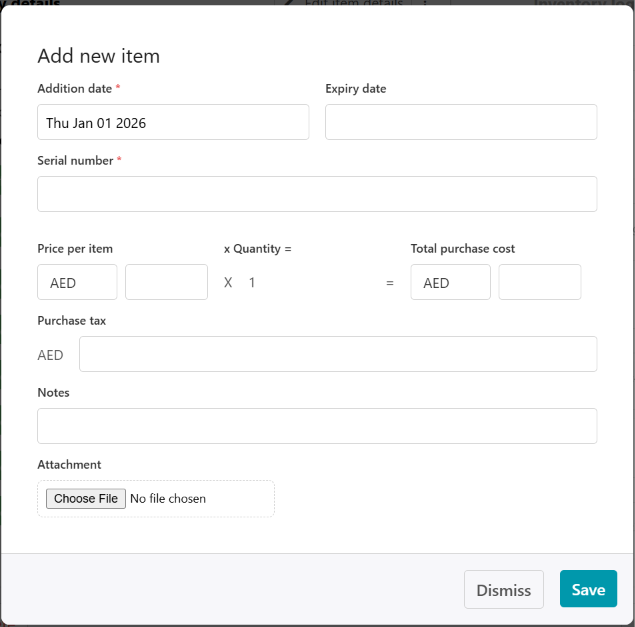
Balsam Medico’s inventory module supports FIFO costing natively, tracking each item at the batch level as stock is received, so every shipment carries its own purchase date, quantity, and unit cost from the moment it’s logged in. When staff record stock usage or a sale, the system automatically draws down from the oldest batch first, both for costing purposes and for the physical pick sequence it surfaces to staff, which keeps expiry-sensitive consumables like anesthetic cartridges and reagents moving in the right order without anyone manually checking dates. To put it to work, a clinic sets its inventory costing preference to FIFO in the system’s settings, logs incoming stock as separate batches rather than merging it into existing on-hand quantities, and lets the platform handle the batch sequencing and cost-of-goods-sold calculation from there — the same batch data that drives expiry alerts and reorder points feeds directly into the FIFO cost reporting, so there’s no separate spreadsheet to reconcile at month-end.

Connect with Us
Ready to embark on this exciting journey? Contact us today:
📍 Dubai, United Arab Emirates – Tel: +971 56 640 9602
📍 Khartoum, Sudan – Tel: +249 91 273 1048
Explore Balsam Medico and discover a world of efficient clinic management at www.balsammedico.com. Together, let’s reduce fines, elevate efficiency, and embrace a new era of dental healthcare.
One last thing..
PS: We built Balsam Medico to be the best software for clinics in UAE and the middle east. It is powerful, flexible, and most importantly, very easy to use.
If you have two minutes, see how it works.
This is the main landing page to learn more.