
 Rayan Farouk
Riayati is now a core part of healthcare digitization in the UAE. For clinic providers, it is not just another portal to learn. It is part of the national direction toward unified medical records, safer data exchange, better care coordination, and cleaner insurance workflows.
If your clinic operates in the Northern Emirates, manages insurance claims, uses an EMR, or is preparing for licensing and compliance reviews, Riayati should be treated as an operational requirement rather than a future IT project. The practical question is not only “What is Riayati?” The real question is: “How do we register, connect our clinic system, train the team, and keep daily workflows compliant?”
This guide explains Riayati for clinic providers in plain operational terms. It covers what Riayati is, who needs it, how registration usually works, what documents and systems to prepare, and what your clinic should do after onboarding. It also shows where Balsam Medico Riayati integration fits into the process for clinics that want a more direct route to connected EMR workflows.
What Is Riayati?
Riayati is the UAE Ministry of Health and Prevention’s digital healthcare platform for the National Unified Medical Record program. Its purpose is to centralize and exchange patient health information securely across connected healthcare providers.
For clinics, Riayati supports the move away from isolated patient files. Instead of each provider keeping a disconnected version of a patient’s record, Riayati helps build a unified clinical view that can support safer decisions, reduce repeated tests, improve continuity of care, and strengthen clinical accountability.
The official MoHAP Riayati page describes the platform around key capabilities such as secure exchange, system interoperability, real-time access, and data integration. You can refer to the official page here: MoHAP Riayati.
Riayati in Simple Terms
For a clinic provider, Riayati is the health information exchange layer that connects your clinic’s clinical data with the national health record infrastructure.
Your clinic continues to use its EMR or clinic management system for daily work: appointments, patient registration, doctor notes, treatment plans, prescriptions, insurance, invoices, consent, reports, and follow-ups. Riayati sits above that daily workflow as the exchange framework that receives, shares, or allows access to structured patient data according to applicable rules.
This is why choosing the right EMR matters. A clinic should not treat Riayati as a manual side task. The correct setup is to use a clinic system that already supports Riayati workflows, structured data, access controls, consent workflows, and integration requirements.
Balsam Medico supports clinic operations with EMR, Riayati integration, insurance tools, consent forms, Emirates ID integration, reporting, scheduling, and billing features. See the product feature overview here: Balsam Medico Features.
Why Riayati Matters for Clinic Providers
Riayati matters because it affects compliance, clinical care, insurance operations, and the long-term scalability of your clinic.
1. It Supports Continuity of Care
When patient records are fragmented, doctors make decisions with incomplete information. Riayati reduces that fragmentation by supporting a more unified view of patient information across connected systems.
For clinics, this can help doctors review relevant patient history, avoid repeated investigations where appropriate, and make decisions with better context.
2. It Reduces Manual Data Burden
A clinic that manages Riayati manually will create friction for doctors, nurses, receptionists, and billing teams. The more practical model is to connect Riayati through a clinic EMR so the clinical record is created once and shared through the appropriate integration route.
This is where a connected clinic management system becomes important. Balsam Medico positions Riayati integration as part of the clinic workflow, not as a separate administrative burden: Balsam Medico Riayati Integration.
3. It Strengthens Data Governance
Riayati is not only about sending records. It also requires proper handling of user roles, patient consent, privacy, data access, auditability, and secure exchange.
Clinics need to think beyond “connection complete.” They need user access policies, staff training, doctor adoption, record quality checks, and internal review processes.
4. It Links Clinical and Insurance Workflows
MoHAP’s e-Claims Post Office through Riayati provides a data exchange system for health insurance claims and related data between healthcare providers and payers in the Northern Emirates. It supports workflows such as eligibility checks, authorizations, claim submissions, e-prescriptions, and payer responses. Official details are available here: Riayati e-Claims Post Office.
For clinic providers, this means Riayati is relevant to both clinical data exchange and revenue cycle discipline. Clinical documentation quality affects claim quality. Claim workflows affect cash flow. A connected system helps align both sides.
Who Needs to Register for Riayati?
Riayati is most relevant for healthcare providers operating under MoHAP/Northern Emirates healthcare requirements and for clinics that need to connect their EMR, PMS, LIS, or insurance workflows to the Riayati ecosystem.
Typical providers include:
Clinics and Polyclinics
Dental clinics, medical centers, specialty clinics, aesthetic clinics, and multi-specialty clinics may need Riayati-connected EMR workflows depending on licensing, authority, service type, and emirate.
Diagnostic Centers and Laboratories
Facilities using LIS platforms may need structured data exchange with Riayati, especially where lab results must become part of the patient’s unified record.
Pharmacies and E-Prescription Workflows
Where applicable, pharmacy and e-prescription workflows may be connected through Riayati-related standards and insurance workflows.
Multi-Branch Healthcare Groups
Groups with multiple clinic branches should treat Riayati as a standardization project. The risk is not only whether one branch is connected. The bigger issue is whether all branches use consistent patient registration, coding, consent, clinical documentation, and claim workflows.
Balsam Medico includes multi-branch support for clinics that need centralized operations across locations: Balsam Medico Multi-Branch Clinic Management.
Riayati, NABIDH, and Malaffi: What Is the Difference?
UAE clinic providers often confuse Riayati, NABIDH, and Malaffi because all three relate to health information exchange and unified medical records.
Riayati
Riayati is associated with MoHAP and the National Unified Medical Record program, especially relevant to providers in the Northern Emirates.
NABIDH
NABIDH is Dubai’s health information exchange initiative. Clinics operating under DHA requirements need to understand NABIDH onboarding and integration. Balsam Medico has a dedicated NABIDH integration page here: Balsam Medico NABIDH Integration.
Malaffi
Malaffi is Abu Dhabi’s health information exchange platform. It is part of the broader UAE health data exchange landscape and has been integrated in phases with Riayati. For official information about Riayati Record access through Malaffi, see: Malaffi Riayati Record FAQ.
Practical Rule for Clinics
Do not select a platform based on guesswork. Your applicable authority, emirate, license, facility type, and services determine your compliance route. A clinic group operating across emirates may need more than one compliance pathway.
How to Register for Riayati: Clinic Provider Checklist
Riayati registration and onboarding should be handled as a structured project. The exact steps can vary by provider type, system, authority communication, and whether you are connecting directly or through an approved/connected EMR vendor.
Use this checklist as an operational guide.
Step 1: Confirm Your Clinic’s Regulatory Scope
Before starting registration, confirm:
- Your licensing authority
- Your emirate and facility location
- Your facility category
- Your active healthcare professional licenses
- Whether your clinic needs Riayati, NABIDH, Malaffi, or more than one integration pathway
- Whether insurance claims are processed through Riayati e-Claims Post Office workflows
This step prevents wasted work. A Dubai-only clinic, for example, may need NABIDH first. A Northern Emirates provider will usually prioritize Riayati. A multi-branch group may need a broader UAE compliance map.
Step 2: Choose a Riayati-Ready EMR or Clinic Management System
The EMR decision is central. MoHAP maintains information about connected healthcare systems, including EMR, PMS, and LIS platforms that meet Riayati integration criteria. You can review the official page here: MoHAP Connected EMRs.
A suitable clinic system should support:
- Structured patient registration
- Emirates ID capture
- Clinical notes
- Diagnoses and procedures
- Prescriptions
- Consent forms
- Role-based access
- Audit logs
- Insurance claim workflows
- Reporting
- Riayati data exchange readiness
- Support and training after go-live
Balsam Medico is listed on MoHAP’s connected systems page and provides Riayati integration support for clinics. The product page explains the Riayati workflow here: Balsam Medico Riayati Integration.
Step 3: Prepare Facility and Contact Information
A clinic should prepare its internal registration file before starting the onboarding process. This prevents delays when the authority, portal, or EMR vendor requests details.
Prepare:
- Facility trade name
- Facility license
- Facility address
- Facility contact details
- Authorized signatory details
- Medical director details
- IT contact
- Insurance/revenue cycle contact
- List of licensed clinicians
- Existing EMR/PMS/LIS details
- Current insurance workflows
- Branch list, if applicable
- Data migration status
- Current patient registration process
- Emirates ID capture process
Step 4: Review Riayati Resources and Standards
MoHAP’s Riayati Resources page provides policies, terminologies, standards, and specifications to help healthcare providers and healthcare IT vendors understand onboarding criteria. Official page: Riayati Resources.
At minimum, your clinic leadership and IT/vendor team should understand:
- What data must be captured
- How clinical data should be structured
- What privacy and confidentiality rules apply
- How user access should be controlled
- What patient consent workflows are needed
- What technical testing may be required
- What operational changes staff must follow after go-live
This is not only an IT reading exercise. It affects reception, nursing, doctors, billing, compliance, and management.
Step 5: Complete Provider Registration or Onboarding Submission
The registration route may involve authority communication, provider portal access, vendor-assisted onboarding, user creation, documentation, agreements, and technical validation.
Do not rely on informal instructions. Use official MoHAP channels and your EMR vendor’s onboarding team.
For clinics using Balsam Medico, the practical route is to coordinate onboarding through the Balsam Medico team so your clinic system, patient data, clinical workflows, and Riayati requirements are aligned from the start.
Relevant internal guide: Riayati Onboarding Guide.
Step 6: Set Up Users, Roles, and Access Controls
After registration, user access must be configured carefully. Riayati-connected workflows involve sensitive patient data. Clinics should apply least-privilege access, meaning staff only get access to what they need for their role.
Typical roles include:
- Doctors
- Nurses
- Reception
- Insurance coordinators
- Billing staff
- Clinic manager
- IT/admin users
- Compliance officer
Avoid shared logins. Shared access destroys accountability and creates audit risk.
Balsam Medico supports dynamic roles and access levels, audit logs, digital consent forms, and clinical documentation features. See: Balsam Medico Features.
Step 7: Validate Patient Identity Workflows
Clean patient identity matching is essential for Riayati. If front desk registration is inconsistent, the downstream record will be unreliable.
Your clinic should standardize:
- Emirates ID capture
- Patient name format
- Date of birth
- Mobile number
- Gender
- Nationality
- Insurance details
- Duplicate patient checks
- Guardian details for minors
- Consent status
Balsam Medico includes Emirates ID integration for faster and more accurate patient identification. Internal reference: Balsam Medico Emirates ID Integration.
Step 8: Complete Testing Before Go-Live
Testing should verify that your clinic can use the system safely and consistently. Do not treat technical connection as the final milestone.
Test:
- Patient creation
- Patient search
- Doctor notes
- Diagnoses
- Procedures
- Prescriptions
- Consent workflows
- Insurance eligibility checks
- Authorization workflows
- Claim submission workflows
- User permissions
- Audit trail
- Reports
- Error handling
- Downtime process
If your clinic has multiple branches, test each branch separately.
Step 9: Train Staff by Workflow, Not by Feature
Training should follow real clinic scenarios.
Reception should learn registration, Emirates ID capture, consent, duplicate patient prevention, appointment updates, and insurance checks.
Doctors should learn documentation, diagnoses, procedures, prescriptions, visit summaries, and how Riayati-related workflows affect clinical record quality.
Insurance staff should learn eligibility, authorization, claim preparation, denial handling, and payer response tracking.
Managers should learn reports, compliance monitoring, revenue cycle indicators, and audit logs.
Balsam Medico provides in-person training and support as part of its product offering: Balsam Medico Features.
What to Do After Riayati Registration
Registration is not the finish line. The most common clinic mistake is to celebrate go-live and then ignore data quality.
1. Audit Patient Registration Quality Weekly
Review patient records for:
- Missing Emirates ID
- Duplicate patients
- Incorrect demographic details
- Missing insurance information
- Incomplete consent
- Incorrect branch assignment
- Manual workarounds
Bad registration data creates clinical, claim, and compliance problems.
2. Monitor Doctor Documentation Completeness
Doctors should document visits in a way that supports continuity of care and insurance accuracy.
Minimum documentation discipline should include:
- Chief complaint
- Clinical findings
- Diagnosis
- Treatment plan
- Procedures
- Prescriptions
- Follow-up instructions
- Attachments or imaging where relevant
- Consent documentation where needed
3. Align Clinical Notes With Insurance Claims
If clinical records and claims do not match, the clinic is exposed to rejection, delay, and audit risk.
Balsam Medico supports insurance workflows, eClaimLink integration, digital claim forms, and real-time claim status updates. For related reading, see: A Faster Way to Use eClaimLink: Inside Balsam Medico.
4. Track Riayati-Related Errors
Create a basic error log. Track:
- Failed submissions
- Missing mandatory fields
- Rejected transactions
- User access problems
- Duplicate patient issues
- Consent issues
- Insurance response delays
- Claim submission errors
- Staff workflow mistakes
Review the log weekly until your process stabilizes.
5. Keep Staff Training Active
New receptionists, doctors, nurses, and insurance coordinators should not learn Riayati workflows informally from another busy employee. Build a short onboarding checklist and require role-specific training before granting system access.
6. Review User Access Monthly
Remove access for resigned staff. Update roles when employees move between departments. Limit admin privileges. Review audit logs for unusual activity.
Healthcare data compliance depends on access discipline.
7. Use Reports to Manage the Clinic
Riayati readiness improves when the clinic’s internal operations are structured. Use reports to monitor:
- Daily patient volume
- Doctor productivity
- Claim status
- Rejections
- Revenue
- Outstanding balances
- Follow-ups
- Patient no-shows
- Branch performance
- Inventory usage
Balsam Medico includes dashboards and dynamic reporting features for clinic management: Balsam Medico Features.
Common Riayati Mistakes Clinics Should Avoid
Mistake 1: Treating Riayati as Only an IT Task
Riayati affects clinical, administrative, billing, and compliance workflows. IT can support the connection, but operations must own daily compliance.
Mistake 2: Choosing an EMR Without Checking Integration Readiness
A generic EMR may not support local UAE workflows properly. Clinics should verify Riayati readiness, support availability, training, data structure, insurance workflows, and reporting before committing.
Mistake 3: Ignoring Front Desk Data Quality
The front desk creates the foundation of the record. Bad patient registration produces downstream problems for doctors, insurance teams, and compliance reviews.
Mistake 4: Not Training Doctors Properly
Doctors need to understand how structured documentation affects Riayati, continuity of care, and claim quality. Minimal notes are not enough.
Mistake 5: Weak Access Control
Shared accounts, excessive admin access, and delayed user removal are serious governance failures. Use role-based access and audit logs.
Mistake 6: No Post-Go-Live Monitoring
A clinic that does not monitor errors after go-live will slowly accumulate data quality issues. Assign ownership and review issues weekly.
Why Use Balsam Medico for Riayati Integration?
Balsam Medico is built for clinic operations in the UAE. It combines EMR, Riayati integration, NABIDH integration, insurance, consent, reporting, scheduling, billing, Emirates ID integration, and patient communication tools.
For clinic providers, the value is workflow consolidation. Instead of running clinical documentation in one place, insurance in another, patient communication separately, and compliance through manual checks, Balsam Medico centralizes the clinic’s core operating system.
Key internal pages:
- Balsam Medico Riayati Integration
- Balsam Medico Features
- Balsam Medico NABIDH Integration
- Balsam Medico Blog
- Riayati Onboarding Guide
- Must-Have Features to Look for in a Clinic Management Platform
- A Faster Way to Use eClaimLink: Inside Balsam Medico
- Balsam Medico Emirates ID Integration
Final Riayati Checklist for Clinic Providers
Before registration:
- Confirm your authority and applicable HIE platform.
- Check whether Riayati applies to your facility.
- Select a Riayati-ready EMR.
- Prepare facility, license, provider, IT, and insurance details.
- Review MoHAP Riayati resources.
- Assign internal owners for clinical, admin, insurance, and IT workflows.
During onboarding:
- Complete provider registration requirements.
- Configure users and roles.
- Set up patient identity workflows.
- Validate consent workflows.
- Test clinical and insurance transactions.
- Train staff by role.
- Fix errors before go-live.
After go-live:
- Monitor patient data quality.
- Review doctor documentation.
- Track claim and authorization issues.
- Audit user access.
- Review reports weekly.
- Continue staff training.
- Keep your EMR updated with compliance changes.
Conclusion
Riayati is not a single registration form or a one-time technical connection. It is a national health information exchange framework that changes how clinics manage patient data, clinical documentation, insurance workflows, consent, and compliance.
The safest approach is to treat Riayati as an operational system. Start with the correct regulatory scope. Use a connected EMR. Prepare your data. Train your staff. Monitor errors after go-live. Keep access controlled. Review performance continuously.
For clinics that want Riayati integration inside a practical clinic management workflow, Balsam Medico provides a direct route through EMR, insurance, consent, Emirates ID, reports, scheduling, and support.
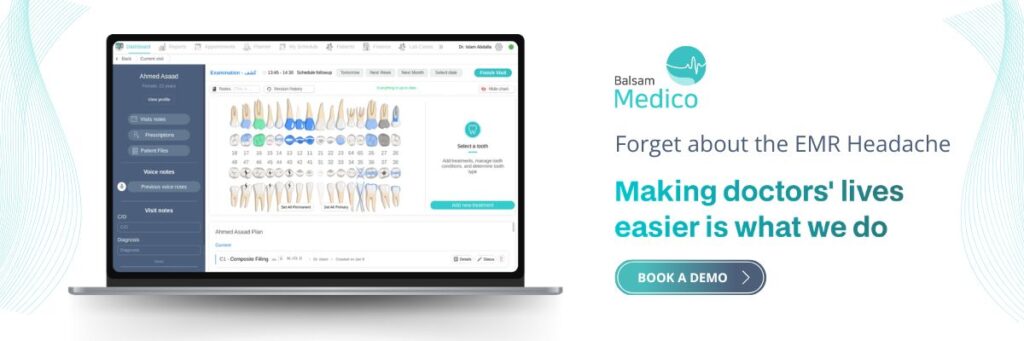
Connect with Us
Ready to embark on this exciting journey? Contact us today:
📍 Dubai, United Arab Emirates – Tel: +971 56 640 9602
📍 Khartoum, Sudan – Tel: +249 91 273 1048
Explore Balsam Medico and discover a world of efficient clinic management at www.balsammedico.com. Together, let’s reduce fines, elevate efficiency, and embrace a new era of dental healthcare.
One last thing..
PS: We built Balsam Medico to be the best software for clinics in UAE and the middle east. It is powerful, flexible, and most importantly, very easy to use.
If you have two minutes, see how it works.
This is the main landing page to learn more.


Great points here about “Riayati for Clinic Providers: How to Register, and What to Do Next”. For readers wanting to dig deeper, Siemens PLC covers a related angle worth checking out.