Rayan Farouk
Patient consent is an important part of running a healthcare facility. Before a doctor performs a procedure, starts a treatment, takes photographs, or shares medical information, patients should understand what they are agreeing to. This is where patient consent forms come in.
For a multi-specialty clinic, managing patient consent can be more complicated than it is for a single-specialty practice. A clinic offering dentistry, dermatology, general medicine, physiotherapy, gynecology, and other services will deal with different treatments, procedures, and levels of risk. Each may require a different type of consent.
A patient agreeing to a general medical consultation is not necessarily agreeing to a dental extraction, a cosmetic injection, or a surgical procedure. Similarly, agreeing to treatment does not automatically mean agreeing to have photographs taken for marketing purposes.
Having the right consent forms helps clinics communicate clearly with patients, document their decisions, and make sure everyone understands what will happen during their care.
In this guide, we will look at what patient consent forms should contain, the different types of consent a multi-specialty clinic may need, and how clinics can manage them more efficiently.
What Are Patient Consent Forms?
Patient consent forms are documents used to record a patient’s agreement to receive a particular medical service, treatment, or procedure.
Before giving consent, patients should receive enough information to understand what is being proposed. This includes the purpose of the treatment, what it involves, possible risks, expected benefits, and any available alternatives.
Consent is not simply about getting a signature. It is about making sure the patient understands their options and makes a decision voluntarily.
For example, a patient visiting a dental department may need to sign a consent form before a tooth extraction. The form should explain the procedure, possible complications, and what the patient should expect during recovery.
A patient visiting a dermatology department for a cosmetic treatment may need a different form explaining the treatment method, possible side effects, expected results, and aftercare instructions.
The purpose of these forms is to make the process clear for both the patient and the healthcare professional.
It is important to remember: A signed form does not replace the conversation between the doctor and the patient. The healthcare professional is still responsible for explaining the treatment and answering questions before proceeding.
Why Are Patient Consent Forms Important for Multi-Specialty Clinics?
Multi-specialty clinics need a clear consent process for several reasons:
Different specialties require different consent

Each department offers treatments with different levels of risk. A general consultation may only require general consent, while a dental extraction, laser treatment, or injectable procedure may require a separate, detailed consent form.
Using one general form for every service may leave important information undocumented.
Patients understand what they are agreeing to
Consent forms give patients an opportunity to review the proposed treatment and understand what it involves. They also encourage doctors to discuss risks, benefits, alternatives, and expected outcomes before starting.
Better medical documentation
A properly completed consent form becomes part of the patient’s medical record. It helps the clinic document what treatment was explained, who provided the information, and whether the patient agreed.
Supporting regulatory compliance
Healthcare facilities in the UAE must follow the consent requirements of their relevant health authority. For example, DHA has published specific Guidelines for Patient Consent, while Abu Dhabi’s Department of Health has its own Patient Consent Standard.
These requirements make it important for clinics to have clear consent policies, appropriate forms, and procedures for handling situations where patients refuse treatment or cannot provide consent themselves.
For clinics operating across different emirates, consent policies should also be reviewed against the requirements of each relevant regulator rather than assuming that one template automatically meets every requirement.
What Should a Patient Consent Form Contain?
Although the information required will vary depending on the treatment, most medical consent forms should contain several important sections.
1. Patient Information
Every consent form should clearly identify the patient.
This section generally includes:
- Patient’s full name.
- Patient identification number or medical record number.
- Date of birth or age.
- Gender, where required by the facility’s documentation process.
- Contact details, where applicable.
Correct patient identification is important because consent must be linked to the right medical record and the right treatment.
2. Treatment or Procedure Details
The form should clearly state what the patient is agreeing to.
Avoid using broad descriptions such as “medical treatment” or “dental procedure” when the actual treatment can be specified.
For example:
- Tooth extraction.
- Root canal treatment.
- Laser hair removal.
- Chemical peel.
- Botox injections.
- Physiotherapy sessions.
- Minor surgical procedure.
The more specific the description, the easier it is for the patient and healthcare team to understand the scope of consent.
3. Explanation of the Procedure
Patients should understand what will happen during the treatment.
This section should explain the procedure in simple language, including what the doctor will do, how long it may take, and whether any preparation is needed.
For example, a dental extraction consent form could explain that the dentist will administer local anaesthesia before removing the affected tooth.
A laser treatment consent form could explain how the laser will be applied and what the patient may experience during the session.
The explanation should be appropriate to the patient’s understanding rather than filled with complicated medical terminology.
4. Potential Risks and Complications
One of the most important parts of a consent form is explaining the possible risks.
Patients should be informed of relevant complications, including those that may be uncommon but significant.
Examples include:
- Pain or discomfort.
- Swelling or bruising.
- Bleeding.
- Infection.
- Allergic reactions.
- Scarring.
- Unexpected treatment outcomes.
- Complications related to anaesthesia, where applicable.
The risks must be relevant to the specific procedure. A generic statement saying that “all medical procedures carry risks” is not a substitute for explaining the actual risks associated with the proposed treatment.
5. Expected Benefits and Results
Patients should also understand what the treatment is expected to achieve.
For example, a physiotherapy consent form may explain that treatment aims to improve mobility, reduce pain, and support recovery.
A cosmetic dermatology form may explain the expected improvement in skin appearance while making it clear that results vary between patients.
Clinics should avoid promising guaranteed results, particularly for cosmetic and elective treatments.
6. Alternative Treatment Options
Where alternatives are available, patients should be informed about them.
For example, a patient with a damaged tooth may have the option of extraction, root canal treatment, or another suitable dental treatment depending on the clinical assessment.
A patient receiving physiotherapy may have different treatment approaches depending on their condition.
The patient should understand that they can discuss these alternatives with the doctor before making a decision.
7. Aftercare and Recovery Information
Some procedures require patients to follow specific instructions after treatment.
The form should explain relevant recovery expectations and any important aftercare requirements.
For example:
- Avoiding certain foods after dental surgery.
- Protecting treated skin from direct sunlight after a laser procedure.
- Avoiding strenuous activity after certain treatments.
- Taking prescribed medication as instructed.
- Attending follow-up appointments.
Detailed aftercare instructions can also be provided in a separate document, but the consent process should cover important recovery expectations before treatment.
8. Patient Acknowledgement and Declaration
The patient should confirm that they:
- Have received an explanation of the proposed treatment.
- Understand the benefits and relevant risks.
- Have had the opportunity to ask questions.
- Understand the available alternatives, where applicable.
- Have voluntarily agreed to proceed.
- Understand that they can ask to stop or withdraw consent, subject to the clinical circumstances and implications.
This section records the patient’s decision.
9. Signatures and Dates
A consent form should provide space for the required signatures and details, including:
- Patient’s signature.
- Treating physician’s name and signature.
- Date and time of consent.
- Witness signature, where required.
- Interpreter’s details and signature, where applicable.
- Legal representative’s name, relationship, and signature, where applicable.
The treating physician should also document the consent discussion in the patient’s medical record.
DHA’s consent guidelines and outpatient facility standards address the need for understandable information, patient identification, treatment details, signatures, and interpreter involvement where needed.
Different Types of Patient Consent Forms in a Multi-Specialty Clinic
Not every patient needs to sign the same consent form. The forms required depend on the services offered by the clinic and the treatment being provided.
Here are some of the common types of consent forms a multi-specialty clinic should consider.

A. General Medical Consent Form
A general medical consent form is usually provided when a patient registers with the clinic or attends for an initial consultation.
It confirms that the patient understands and agrees to routine aspects of receiving healthcare services, within the scope explained by the facility.
It may cover:
- General medical examinations.
- Routine consultations.
- Basic clinical assessments.
- Taking vital signs.
- Medical history collection.
- Routine care and documentation.
For example, a patient visiting a general practitioner for a consultation may complete a general consent form before the examination.
However, general consent should not be treated as permission for every possible procedure. Treatments that require specific informed consent should have their own documentation.
B. Procedure-Specific Consent Form
This form is used when a patient agrees to a particular medical procedure or treatment that requires more detailed explanation.
It should clearly describe the procedure, expected benefits, possible risks, alternatives, and aftercare.
Examples include:
- Minor surgical procedures.
- Wound suturing.
- Biopsies.
- Cyst removal.
- Skin tag removal.
- Other invasive procedures.
For instance, a patient undergoing a skin biopsy should receive an explanation of how the sample will be collected, possible bleeding or infection, and what happens to the sample afterwards.
C. Dental Treatment Consent Form
Dental departments often require several different consent forms because dental treatments vary significantly.
A clinic offering general dentistry, orthodontics, endodontics, and oral surgery may need separate forms for different procedures.
Examples include:
- Tooth extraction consent.
- Root canal treatment consent.
- Dental implant consent.
- Crown and bridge consent.
- Orthodontic treatment consent.
- Teeth whitening consent.
- Scaling and polishing consent.
- Periodontal treatment consent.
For example, an implant consent form should explain the implant procedure, possible complications, healing period, expected results, and alternative options.
It should also explain that successful implant treatment depends on several factors, including the patient’s oral health and ability to follow aftercare instructions.
D. Dermatology and Cosmetic Treatment Consent Form

Dermatology and aesthetic departments need particular attention when preparing consent forms because some treatments are elective and results may differ from one patient to another.
These forms should explain the treatment process, possible side effects, expected results, and limitations.
Examples include:
- Laser hair removal consent.
- Chemical peel consent.
- Microneedling consent.
- Botox and filler consent.
- Skin rejuvenation consent.
- Acne treatment consent.
- PRP treatment consent.
For example, a laser hair removal consent form should explain the possibility of temporary redness, irritation, pigmentation changes, or other relevant complications.
For injectable treatments, the form should also explain the product being used, the treatment area, possible reactions, and any procedure-specific complications.
Patients should understand that cosmetic treatments do not guarantee a particular appearance or outcome.
E. Surgical and Anaesthesia Consent Form
Clinics that provide surgical or minor surgical services should have appropriate surgical consent documentation.
This form should explain:
- The planned surgical procedure.
- The reason for the surgery.
- Expected benefits.
- Potential complications.
- Available alternatives.
- Type of anaesthesia, where applicable.
- Recovery expectations.
- Possible need for additional intervention.
Anaesthesia should also be addressed through the appropriate consent process, including relevant risks and information about the type of anaesthesia being proposed.
For example, a patient undergoing a minor surgical procedure under local anaesthesia should understand what the anaesthesia involves and its possible side effects.
Written consent requirements for surgery are particularly important under UAE medical liability legislation, subject to applicable emergency exceptions and legal provisions.
F. Radiology and Diagnostic Imaging Consent Form
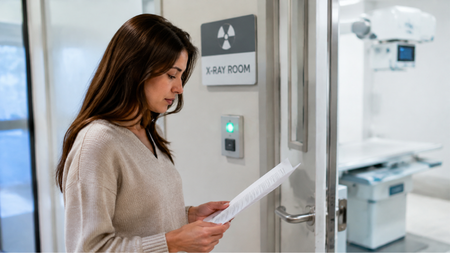
Clinics with radiology departments may need specific consent forms for certain imaging procedures, particularly those involving contrast agents or other additional risks.
Examples include:
- Contrast-enhanced CT scans.
- Contrast-enhanced MRI scans.
- Certain diagnostic procedures.
- Imaging procedures involving special preparation.
The form should explain the purpose of the examination, what the patient will experience, relevant risks, and any preparation requirements.
For example, before administering contrast material, the healthcare professional should explain possible reactions and ask about relevant allergies, previous reactions, and medical conditions.
Not every routine X-ray requires a separate written consent form. Clinics should follow the applicable requirements for each imaging service.
G. Laboratory and Sample Collection Consent
Most routine blood tests and sample collections are covered by the clinic’s applicable general consent and clinical procedures.
However, some tests or sample collection procedures may require additional consent depending on their nature.
Examples include:
- Certain genetic tests.
- Specialised diagnostic testing.
- Invasive sample collection.
- Tests involving additional privacy or data-sharing considerations.
Patients should understand why the sample is being collected, what it will be used for, and whether any additional arrangements apply.
H. Vaccination and Injection Consent Form
Clinics offering vaccination services or therapeutic injections should have an appropriate consent process.
The form or accompanying documentation should cover:
- Name of the vaccine or medication.
- Purpose of administration.
- Expected benefits.
- Possible side effects.
- Relevant allergies and medical history.
- Important precautions.
- What to do if an unexpected reaction occurs.
For example, a patient receiving a seasonal influenza vaccine should understand the purpose of the vaccine, common reactions, and any relevant precautions.
For injections such as vitamin B12 or other prescribed medications, the consent process should reflect the specific medication and administration procedure.
I. Physiotherapy and Rehabilitation Consent Form
Physiotherapy involves physical activities and treatment techniques that may cause temporary discomfort or other side effects.
A physiotherapy consent form should explain:
- The purpose of the treatment.
- Planned treatment techniques.
- Expected benefits.
- Possible discomfort or risks.
- Expected number or frequency of sessions, where known.
- Patient responsibilities during treatment.
- When the patient should report pain or discomfort.
For example, a patient receiving manual therapy should understand what the technique involves and that some temporary soreness may occur.
Consent should also be reviewed if the treatment plan changes significantly.
J. Telemedicine Consent Form
Clinics offering online consultations should consider a separate telemedicine consent form.
Patients should understand how remote consultations work and the limitations of receiving medical advice without a physical examination.
The form may cover:
- How the online consultation will take place.
- Limitations of remote assessment.
- Privacy and confidentiality.
- Use of electronic communication.
- Circumstances requiring an in-person visit.
- What to do in an emergency.
For example, if a patient develops symptoms that require a physical examination, the doctor may recommend an in-person appointment rather than continuing with an online consultation.
K. Photography and Video Recording Consent Form
This is particularly important for dermatology, dentistry, cosmetic treatments, and other specialties where clinical photographs are commonly taken.
Clinics may need photographs to document a patient’s condition, monitor treatment progress, or compare results before and after a procedure.
However, agreeing to clinical photography does not automatically mean that the patient agrees to having their photographs used for marketing.
Clinics should distinguish between:
- Clinical photography: Images used for diagnosis, treatment planning, and medical documentation.
- Educational use: Images used for professional training, presentations, or educational purposes.
- Marketing use: Images used on social media, websites, advertisements, or promotional materials.
- Video recording: Recording consultations or procedures for an approved purpose.
Patients should be able to understand and make separate decisions about these uses.
Marketing and promotional consent should never be assumed simply because the patient has agreed to receive treatment.
L. Consent for Minors and Patients Unable to Provide Consent
Multi-specialty clinics also need procedures for situations where patients cannot legally or practically provide their own consent.
This may include:
- Children receiving dental or medical treatment.
- Patients who lack decision-making capacity.
- Patients who are temporarily unconscious or unable to communicate.
In these situations, the clinic must follow applicable UAE legal requirements regarding the authorised parent, guardian, legal representative, or substitute consent giver.
The form should record the representative’s full name, relationship to the patient, identification details where required, and signature.
Healthcare professionals should also assess whether the patient can understand the information and participate in the decision as appropriate.
For example, a parent or legally authorised representative may need to provide consent before a child undergoes a dental extraction.
Clinics should not assume that any accompanying family member automatically has the legal authority to consent.
M. Treatment Refusal and Withdrawal of Consent Form

Consent is not a one-time decision that patients must follow regardless of changing circumstances.
Patients have the right to refuse proposed treatment or withdraw their consent, subject to applicable legal provisions and emergency circumstances.
A clinic should have a process for documenting these decisions.
For example, a patient may initially agree to a dental procedure but decide not to proceed after discussing the treatment further.
The healthcare professional should explain the possible consequences of refusing treatment and document the patient’s decision.
The record should include:
- The proposed treatment.
- The reason for refusal, if the patient wishes to provide one.
- The risks or consequences explained.
- The patient’s decision.
- The treating doctor’s signature and date.
A refusal form does not remove the healthcare professional’s responsibility to explain the medical implications and provide appropriate advice.
Quick Comparison of Consent Forms by Specialty
A multi-specialty clinic can organise its consent documentation according to the departments and services it offers.
The following table provides an example of how this can be structured:
| Department | Common consent forms |
|---|---|
| General Medicine | General medical consent, vaccination consent |
| Dentistry | Extraction, root canal, implant, orthodontic consent |
| Dermatology | Laser, chemical peel, Botox, fillers, microneedling |
| Physiotherapy | Rehabilitation and manual therapy consent |
| General Surgery | Minor surgery and anaesthesia consent |
| Radiology | Contrast-enhanced imaging consent |
| Laboratory | Specialised testing and sample collection consent |
| Telemedicine | Remote consultation consent |
These are examples rather than a mandatory list. A clinic should identify the forms needed based on its actual licensed services, procedures, and regulatory requirements.
How Should Clinics Manage Patient Consent Forms?
Having the correct forms is only one part of the process. Clinics also need a reliable way to make sure they are completed, stored, and accessible when needed.
Here are some practical ways to manage consent documentation.
Use Separate Forms for Different Procedures
Avoid relying on one general consent form for every treatment.
Create procedure-specific templates for services that require detailed informed consent.
For example, a dental implant consent form should not be the same as a routine dental examination form.
At the same time, avoid creating unnecessary paperwork for every minor activity. The goal is to have the right documentation without making registration and treatment unnecessarily complicated.
Make Forms Easy to Understand
Consent forms should use simple language that patients can understand.
Avoid filling documents with medical terminology without explanations.
In the UAE, clinics should consider providing consent forms in Arabic and English, as well as other languages where the patient population requires them.
If a patient does not understand the language used, an appropriate interpreter should assist with the consent discussion.
Obtain Consent Before Starting Treatment
Consent should be obtained before the relevant procedure or treatment begins.
Patients should have enough time to review the information, ask questions, and make their decision without feeling pressured.
A signature collected after the procedure does not replace the required informed consent process.
Review and Update Consent Forms
Medical procedures, clinic services, and regulatory requirements can change.
Clinics should periodically review their consent forms to ensure they remain accurate and relevant.
For example, if a dermatology department introduces a new laser treatment, the clinic should review whether its existing consent documentation adequately covers the new procedure.
It is also important to remove outdated forms from circulation so that staff do not accidentally use old versions.
Store Consent Forms in the Patient’s Medical Record
Consent documentation should be stored securely and linked to the correct patient record.
This makes it easier for doctors and authorised staff to review the patient’s consent history when needed.
Clinics should also ensure that electronic consent forms are properly saved, dated, and accessible according to their internal access permissions and applicable data protection requirements.
Common Mistakes Clinics Should Avoid
Even clinics with established consent procedures can experience documentation problems.
Some common mistakes include:
Using one form for all treatments: General consent does not replace procedure-specific consent when detailed informed consent is required.
Missing information about risks: Forms should explain relevant risks rather than simply asking patients to accept responsibility for possible complications.
Not explaining the procedure: A signed form is not enough if the patient has not received an appropriate explanation.
Combining treatment and marketing consent: Agreeing to treatment should not automatically mean agreeing to promotional photographs or videos.
Missing signatures or dates: Incomplete forms can create uncertainty about who agreed to the treatment and when.
Using outdated templates: Forms should reflect the clinic’s current services and applicable regulatory requirements.
Failing to document refusal: If a patient declines treatment, the discussion and decision should be recorded in the medical file.
These mistakes can often be reduced through staff training, standardised procedures, and proper electronic documentation.
How an EMR System Helps Manage Patient Consent Forms
Managing consent forms manually can become difficult for multi-specialty clinics, especially when patients visit different departments or receive multiple treatments.
Paper forms can be misplaced, incomplete, or difficult to retrieve. Staff may also struggle to identify which form is required for a particular procedure.
An Electronic Medical Records (EMR) system can help simplify this process by bringing patient documentation together in one place.
With a system such as Balsam Medico, clinics can improve the way they organise and manage patient records through digital documentation and structured clinical workflows.
Some of the practical benefits include:
Centralised patient records: Keep patient documentation organised so authorised healthcare professionals can access relevant information during consultations and treatment.
Digital consent documentation: Maintain electronic copies of completed consent forms within the patient’s medical record, subject to the system’s configured capabilities.
Easier document retrieval: Reduce the time spent searching through physical folders when staff need to review previous consent documentation.
Better coordination between departments: When a patient visits multiple specialties, authorised staff can review relevant medical documentation to support continuity of care.
Reduced paperwork: Digital workflows can help reduce the need to print, file, and manually organise every document.
However, an EMR system does not replace the doctor’s responsibility to explain the procedure, obtain valid consent, and ensure the patient understands their decision.
Clinics should also ensure that their digital consent process meets applicable requirements for patient identification, signatures, timestamps, access control, confidentiality, and record retention.
Conclusion
Patient consent forms are an essential part of managing a multi-specialty clinic. They help patients understand their treatment options while allowing healthcare professionals to document important decisions throughout the care process.
From general medical consultations and dental procedures to cosmetic treatments, physiotherapy, surgery, and telemedicine, each service may have different consent requirements.
The most important thing is not simply having a large collection of forms. It is making sure that each form is relevant, understandable, properly completed, and stored in the patient’s medical record.
For clinic owners and managers, having a structured consent management process also means better coordination between departments and fewer documentation gaps.
With the right procedures and an organised EMR system, clinics can make patient consent easier to manage while keeping patient understanding and safety at the centre of care.

Connect with Us
Ready to embark on this exciting journey? Contact us today:
📍 Dubai, United Arab Emirates – Tel: +971 56 640 9602
📍 Khartoum, Sudan – Tel: +249 91 273 1048
Explore Balsam Medico and discover a world of efficient clinic management at www.balsammedico.com. Together, let’s reduce fines, elevate efficiency, and embrace a new era of dental healthcare.
One last thing..
PS: We built Balsam Medico to be the best software for clinics in UAE and the middle east. It is powerful, flexible, and most importantly, very easy to use.
If you have two minutes, see how it works.
This is the main landing page to learn more.